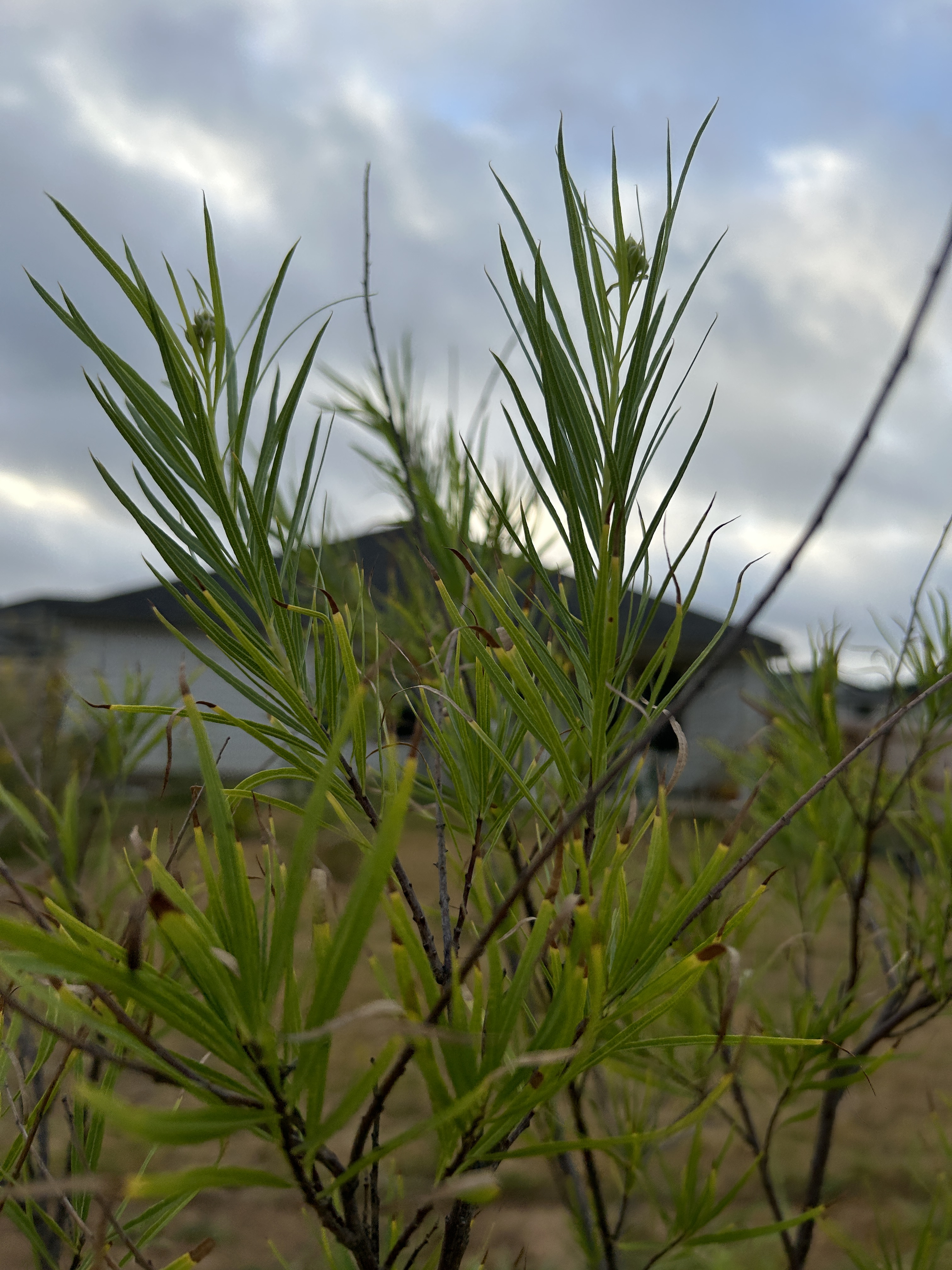
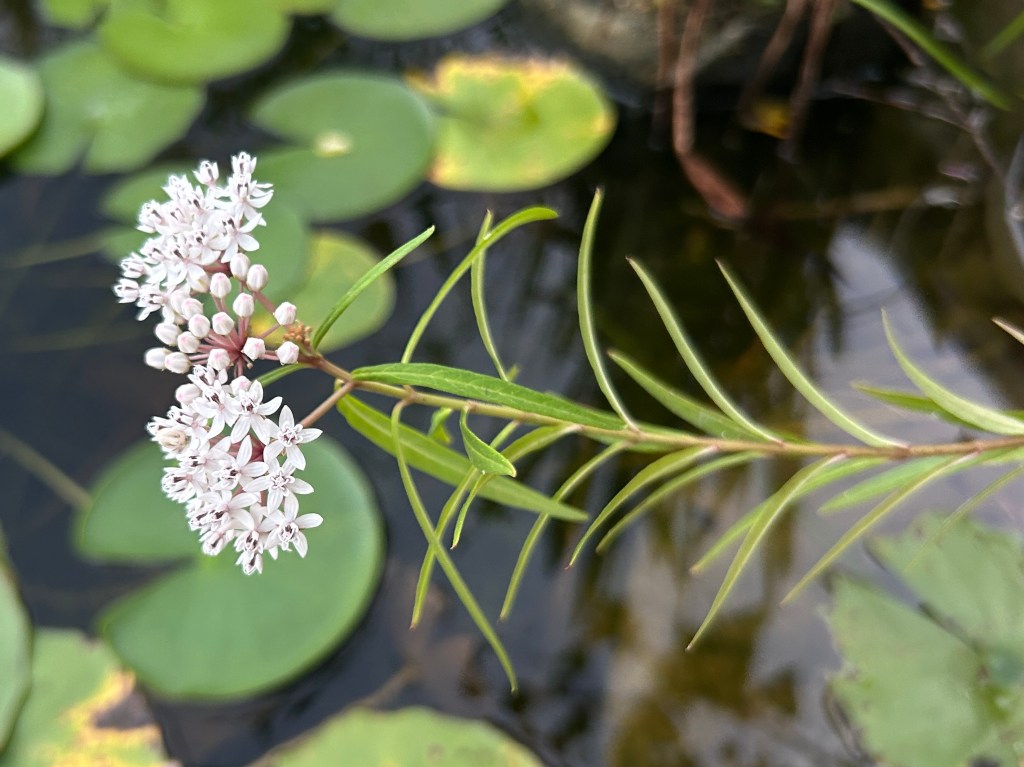
Milkweeds are the only plant that Monarch butterflies will use to lay their eggs and host their caterpillar larvae. However, Monarchs will feed from a lot of other nectar sources, as will other creatures, and so before planting milkweeds I focused more on building a garden with a variety of food sources at different times of year. It’s especially helpful to have native plants that bloom in the fall to provide food for Monarchs as they pass through Texas on their migratory journey to Mexico.
Since 2024, I have been trying to create a small area at the back of the garden that will have a variety of native milkweed plants. It would be helpful for Monarchs to have an area where milkweed plants are clustered together, so that they are easy to find, and so that caterpillars can move from one plant to another as needed.
However, I am still struggling to develop this area because there is major soil erosion during heavy rain events and the soil quality is probably pitiful. I have made some attempts to protect this corner, but I haven’t found the right solution yet.
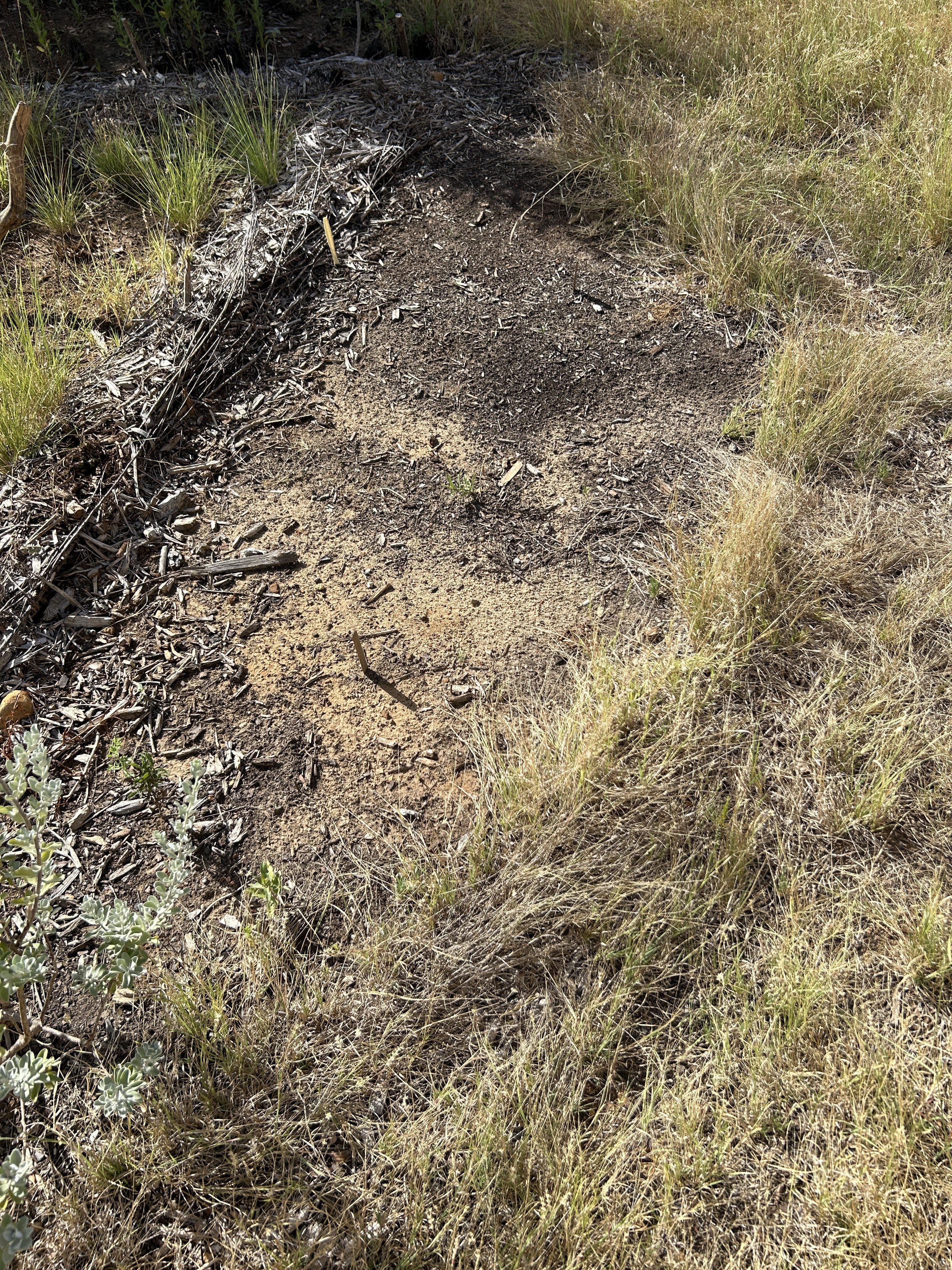
The types of milkweed that I have planted here are: Zizotes Milkweed (Asclepias oenotheroides), Antelope Horns (Asclepias asperula), Green Milkweed (Asclepias viridis), and Butterflyweed (Asclepias tuberosa). To my knowledge, only Zizotes and Antelope Horns (small plants) are growing in this area at the moment. There is also Aquatic Milkweed (Asclepias perennis) in the pond. In this earlier post, I have written more about the different native milkweeds that I have, and also about the problems with Tropical Milkweed, which I do not recommend.
As further evidence that the environment of my chosen milkweed patch is a specific problem in that particular area, I have larger volunteer milkweed plants in multiple other places! Most of those are Zizotes.
There’s one right in the middle of a mulch pathway. In fact, I adjusted the width of the path here to accommodate it.
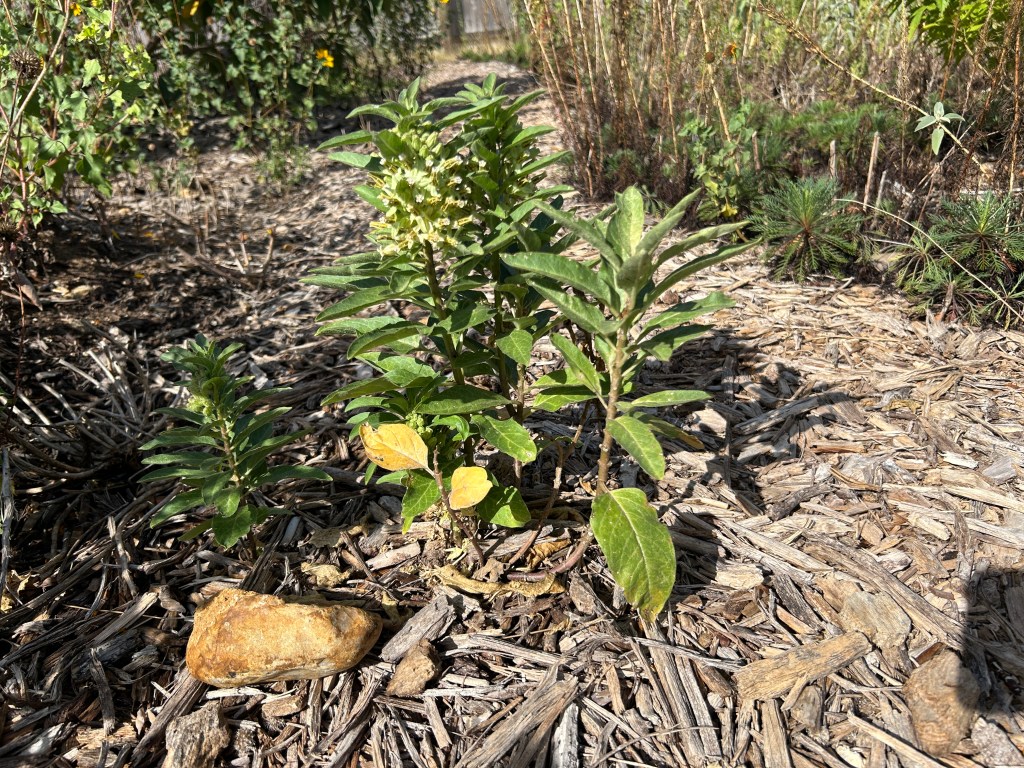
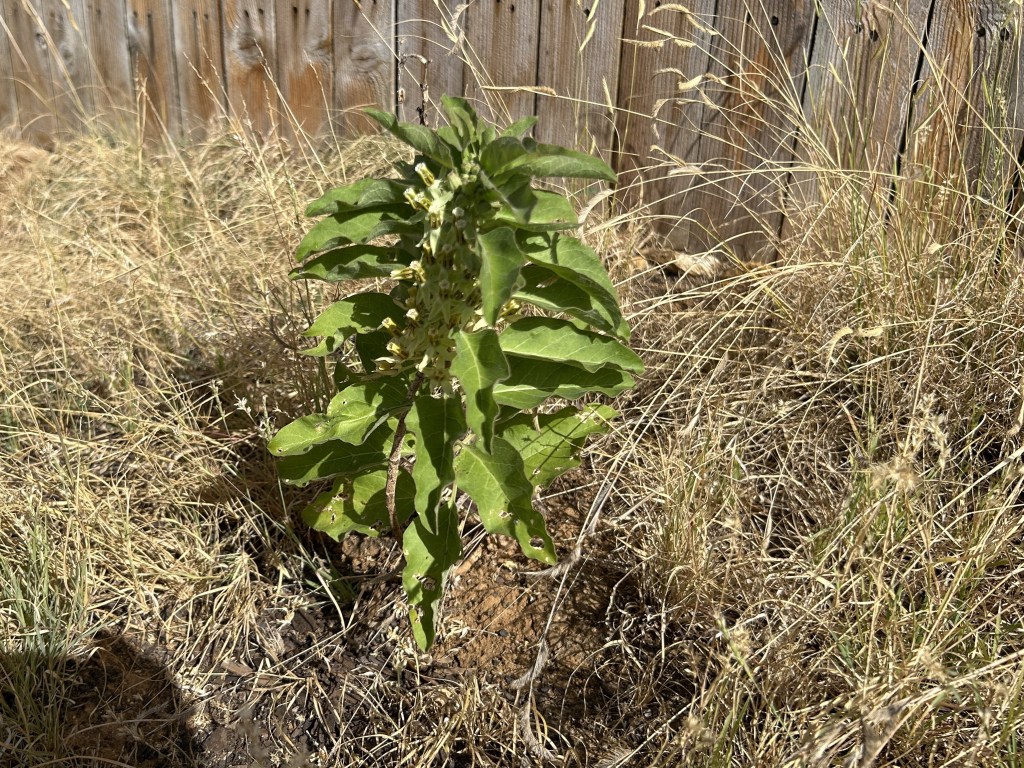
There’s one in the middle of the Thunder Turf short native grass area. The surrounding grass is rather dry at the moment, but that’s to be expected given our lack of rain.
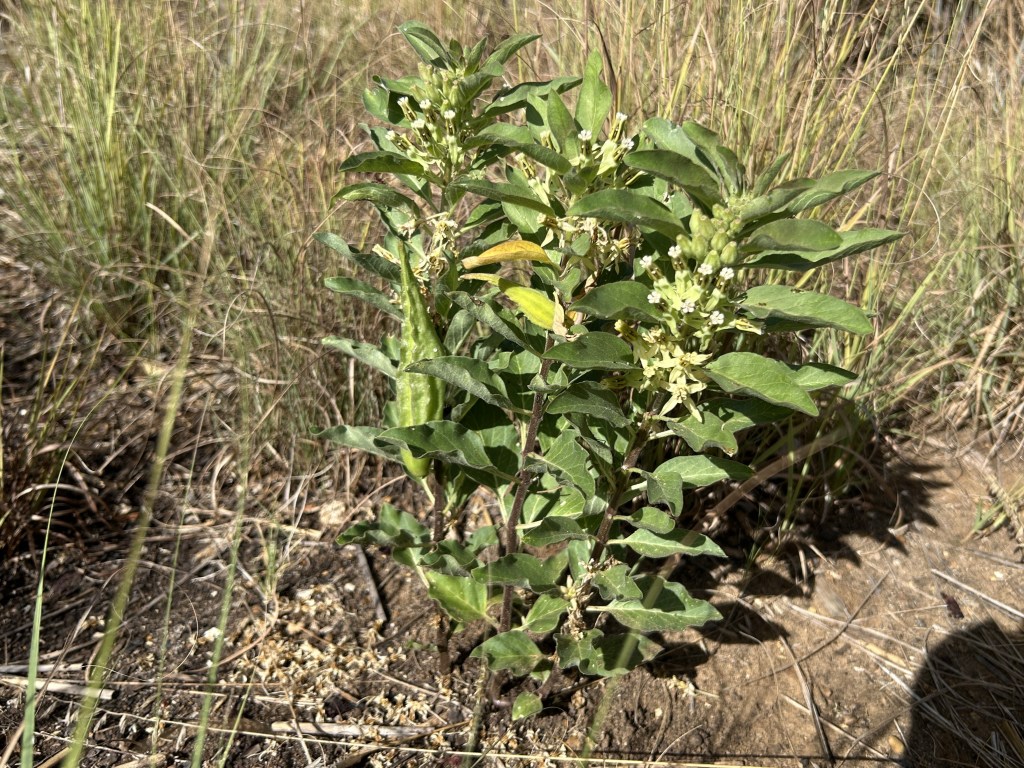
Another Zizotes is in the middle of the taller prairie grass area. This one has a large seed pod forming (on the left).
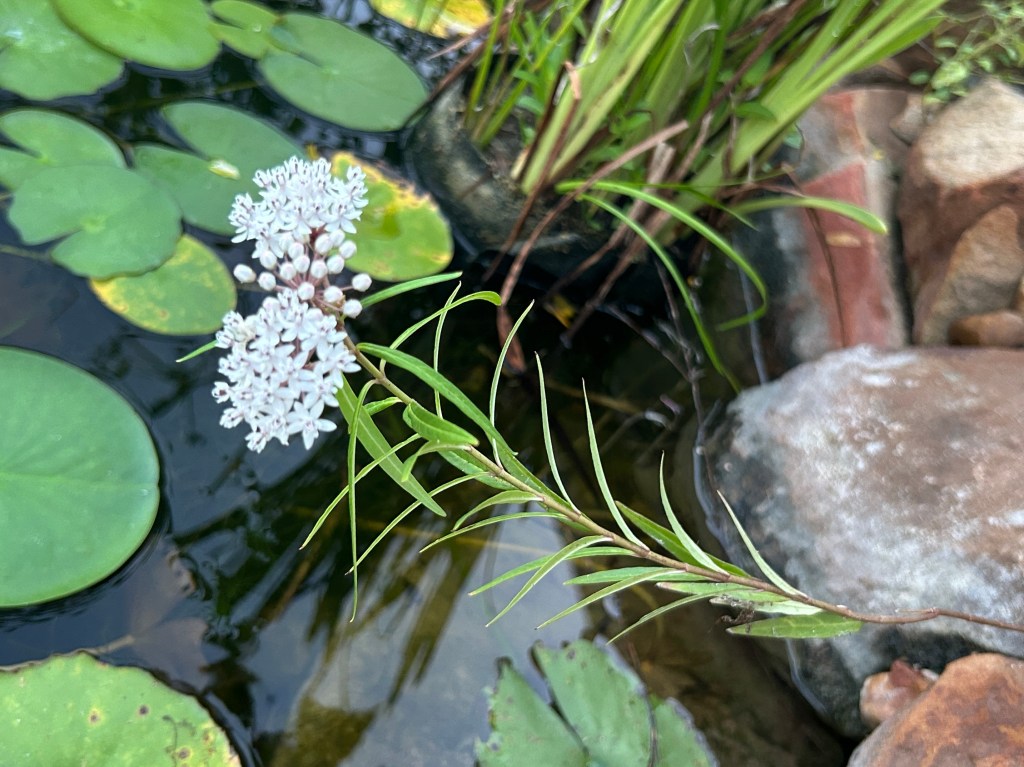
I recently found a volunteer Aquatic Milkweed growing between two rocks at the edge of the pond. The original plant is in a pot on the other side of the pond, so this one must have self-seeded into the new location.
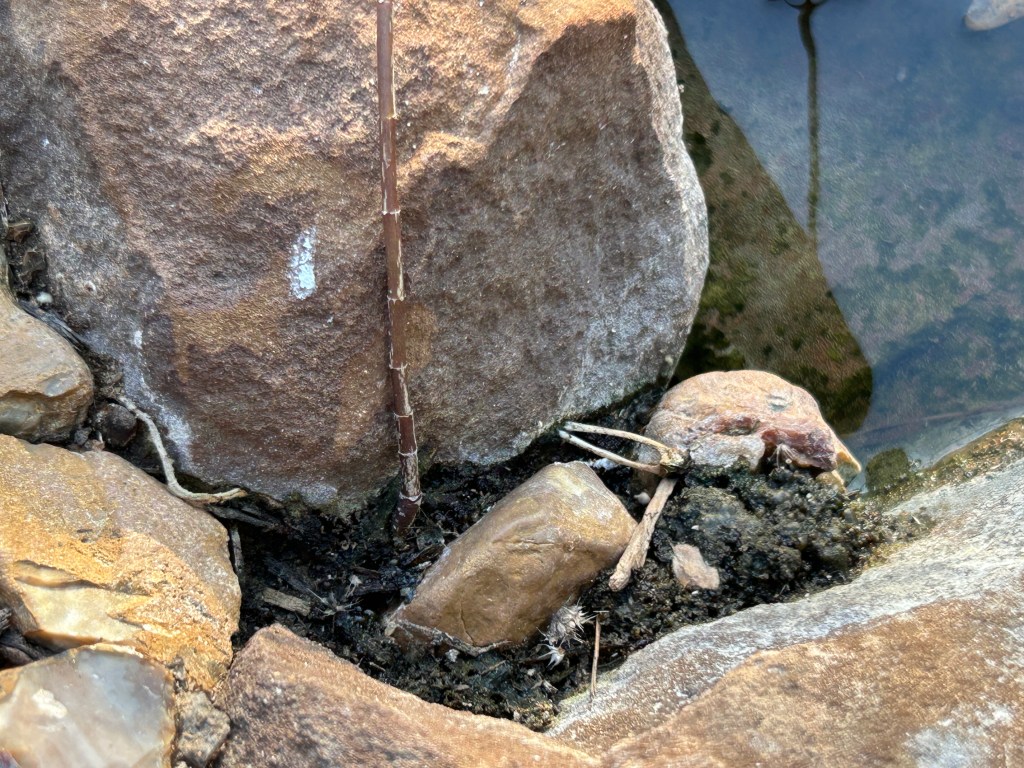
This is the tiny pocket of soil that the seed found.
So in summary, I do have milkweed plants here, but they are most happily growing in places that they chose themselves. I think that I will try one more year to develop a milkweed patch in the area that I originally planned, and if that still doesn’t show signs of working, I may have to reconsider what to do. And in the meantime, who knows where Zizotes will pop up next!


 Rewilding My Lot
Leave a comment