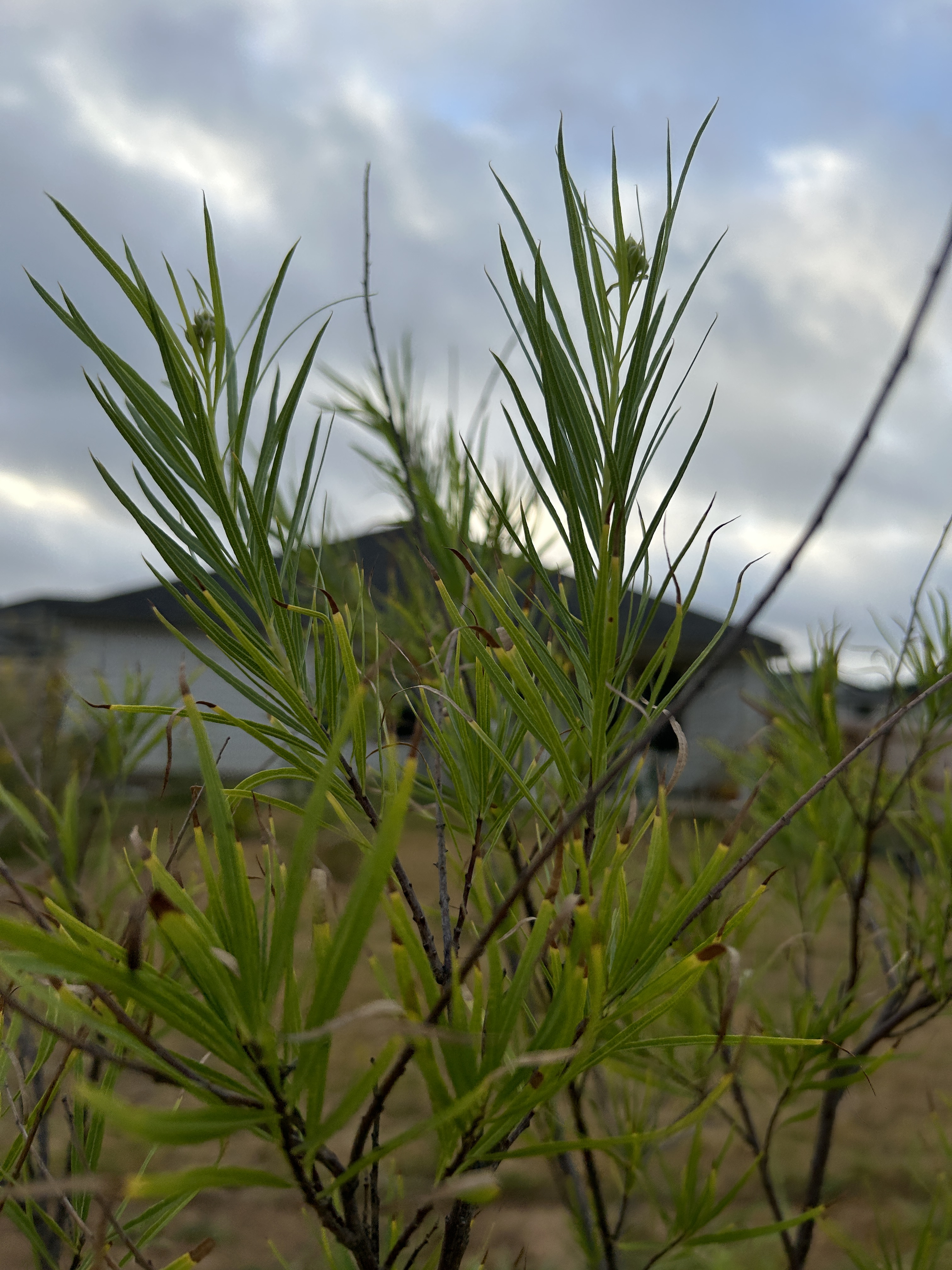
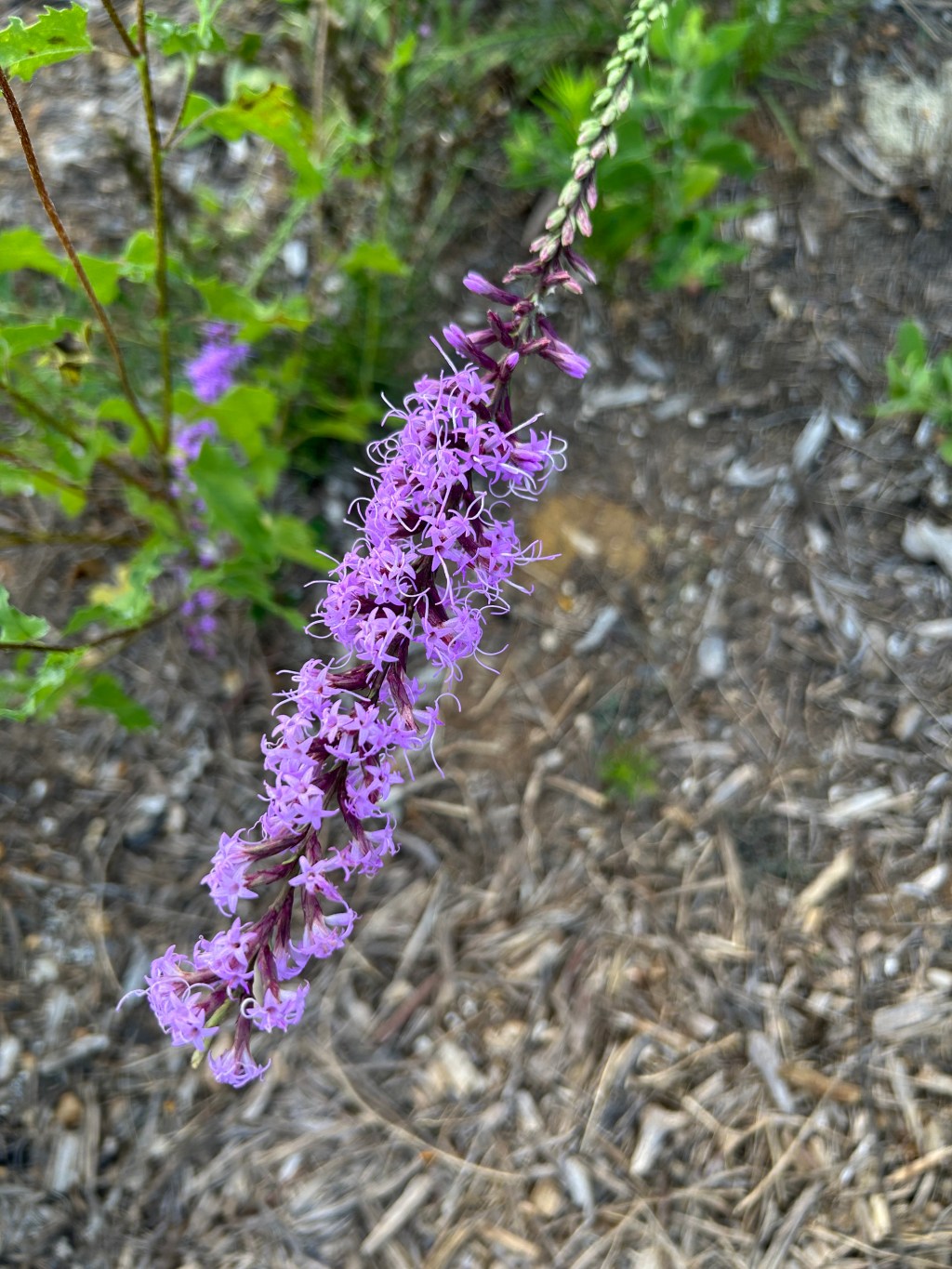
There are several different Liatris plants (five listed in the Native Plant Society of Texas database), with the Gayfeather aka Texas Blazing Star (Liatris punctata) probably being the best suited for my ecosystem — in particular, it is the most drought-tolerant of the gayfeathers.
Last November I inadvertently started an experiment to compare three different Liatris plants here when I went shopping for L. punctata to add to the one I already had, but could only find two other kinds, which I bought anyway.
After planting, I then had a collection of:
- One Gayfeather aka Texas Blazing Star (Liatris punctata) — one year older than the others
- Two Sharp Blazing Star (Liatris acidota)
- Two Tall Blazing Star aka Rough Blazing Star (Liatris aspera)
All five of these were located fairly close together and treated the same.
The Gayfeather aka Texas Blazing Star (Liatris punctata) is doing the best of all of them, but that’s not surprising since it’s a year older. It bloomed last year, and now the clump is bigger and it is blooming again. The photo at the top of this post (taken a couple of weeks ago) is also L.punctata.
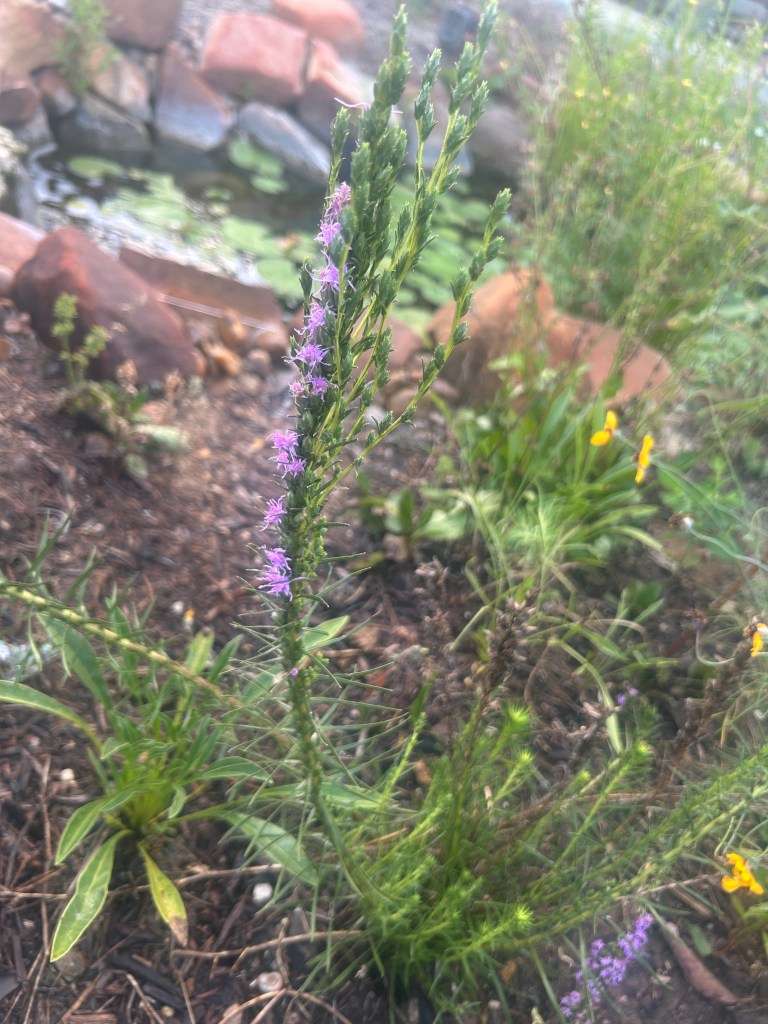
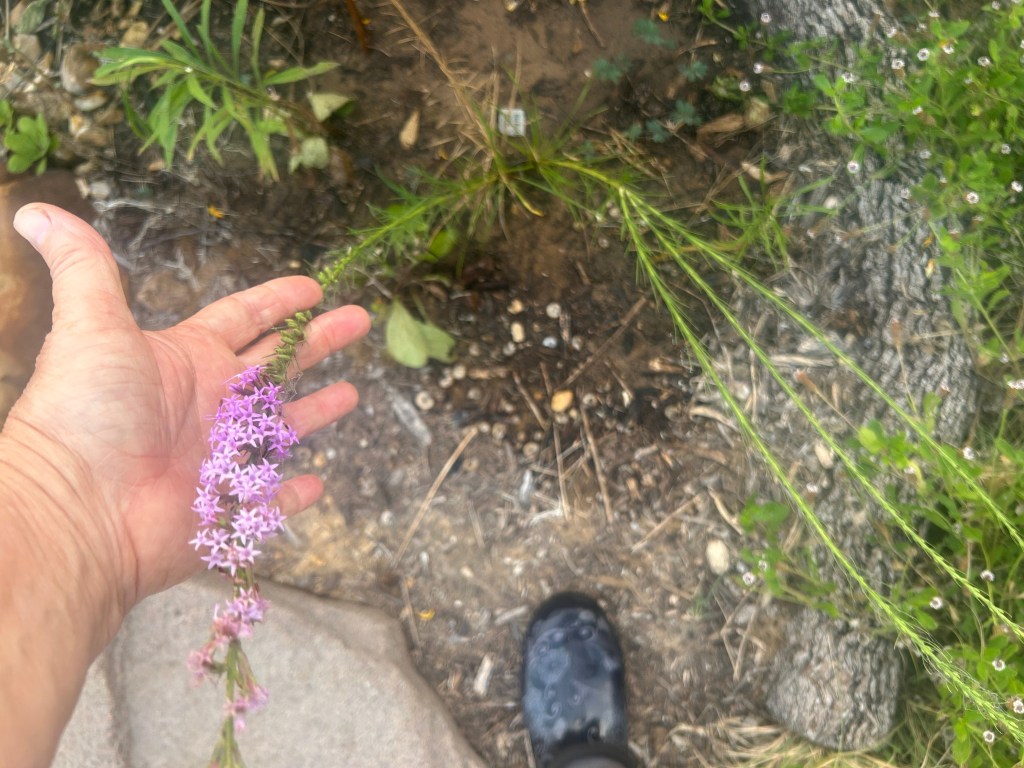
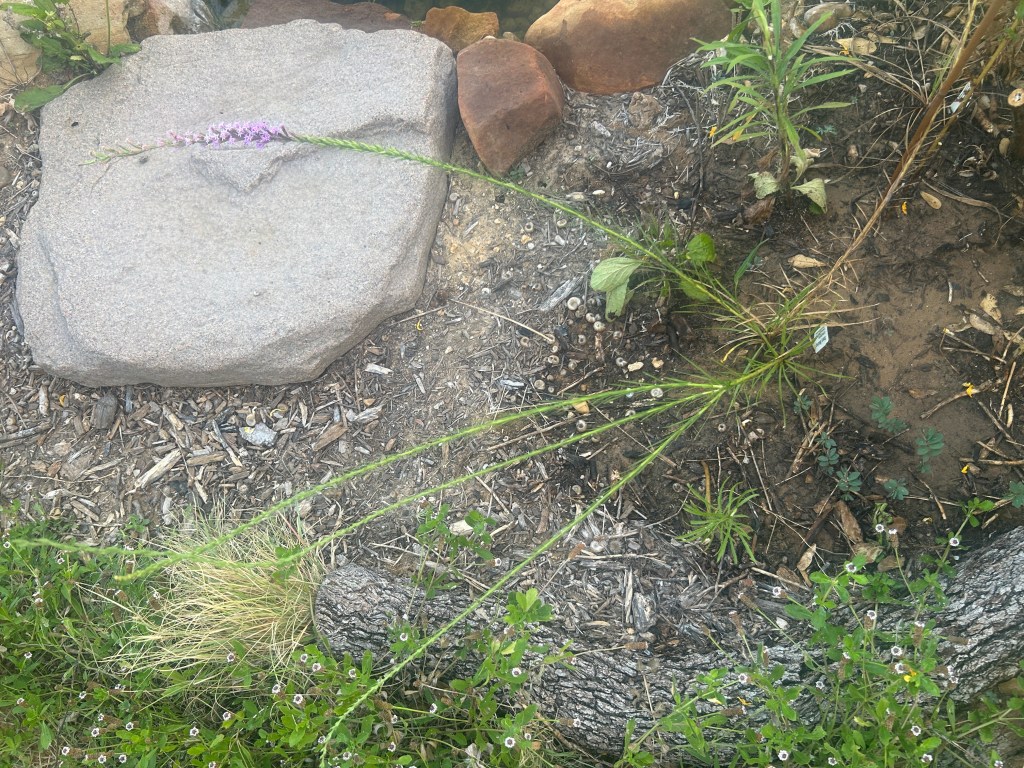
Of the two other types, all the same age, it seems clear that one is doing better: Sharp Blazing Star (Liatris acidota). Below are photos of those two. They are blooming, but taller and more leggy than the L. punctata.
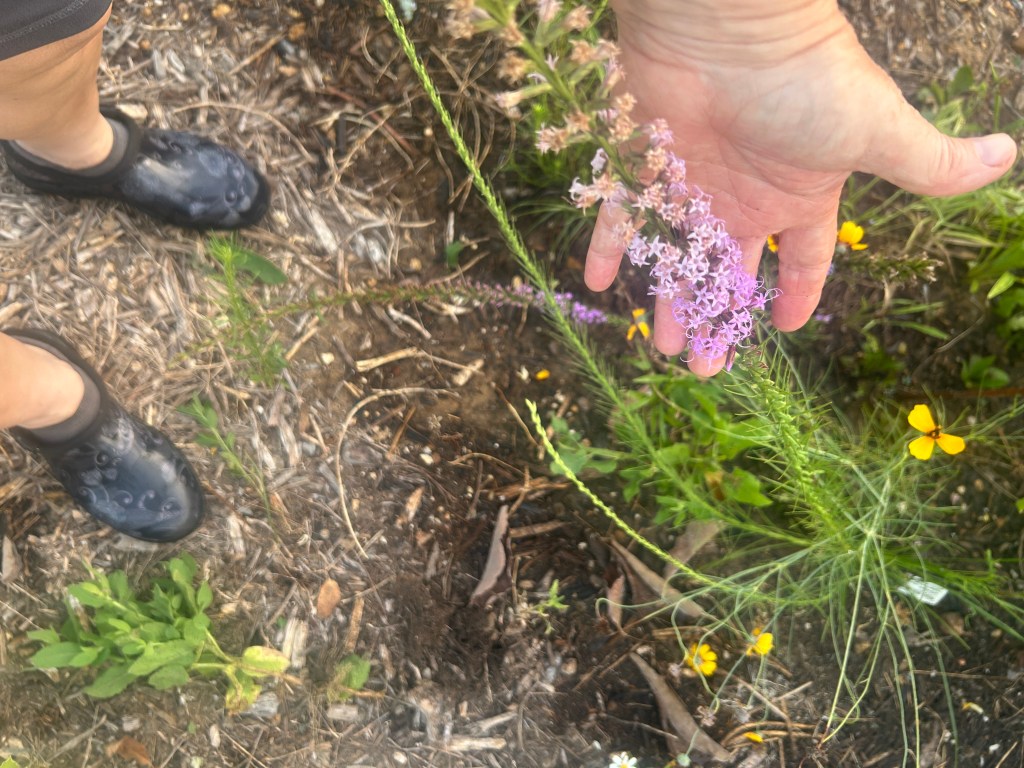
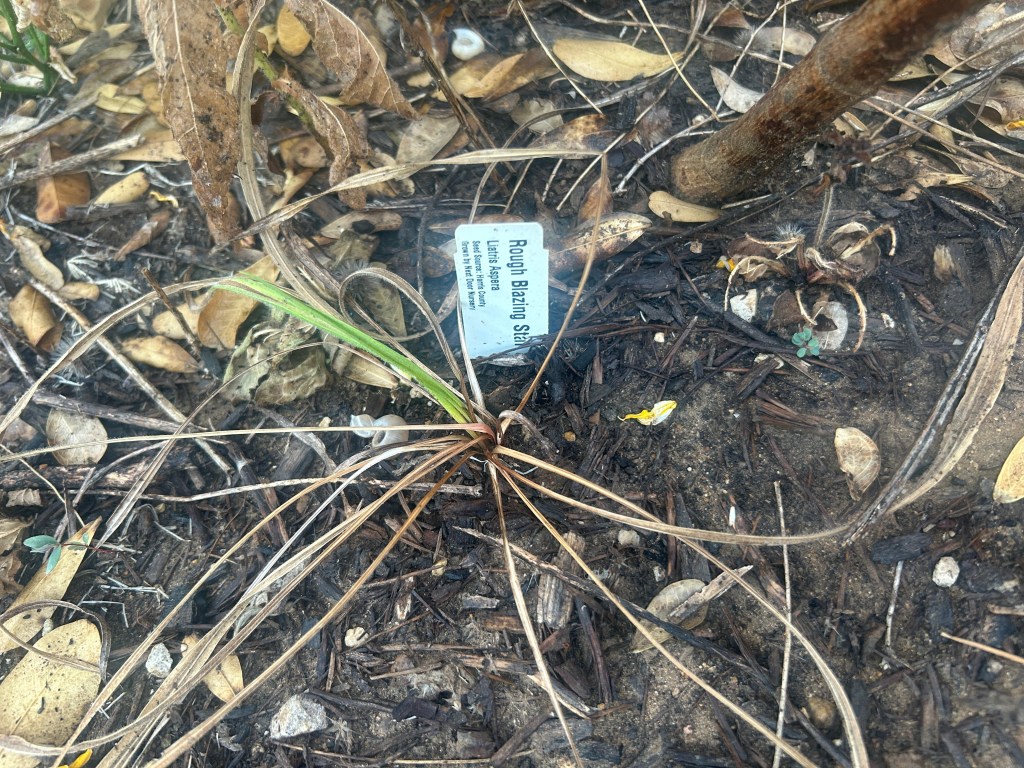
Here’s a photo of one of the Tall Blazing Star aka Rough Blazing Star (Liatris aspera). Neither of them is doing well at all.
I’d like to have more Liatris plants here, near the pond. Dragonflies and damselflies like to perch on the tall bloom spikes as they watch for prey or mates. My first choice is still Gayfeather (L. punctata). It seems to like the environment here and the bloom spikes are sturdier — that makes them more available as insect perches.
Sharp Blazing Star (L. acidota) also grows well here, but the bloom spikes tend to grow tall and droopy. I prefer the more compact “footprint” and rigidity of the Gayfeather (L. punctata).


Leave a comment