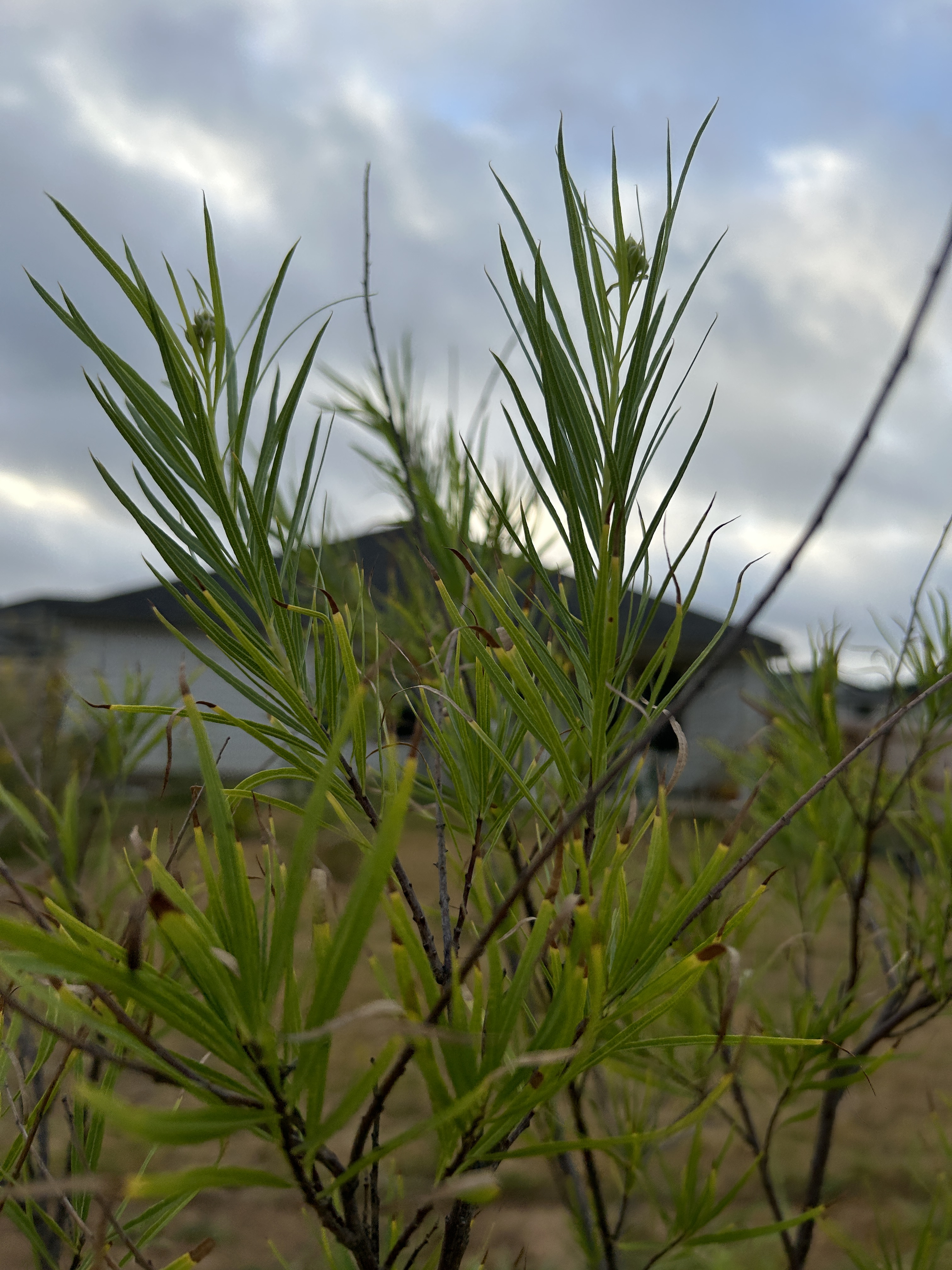
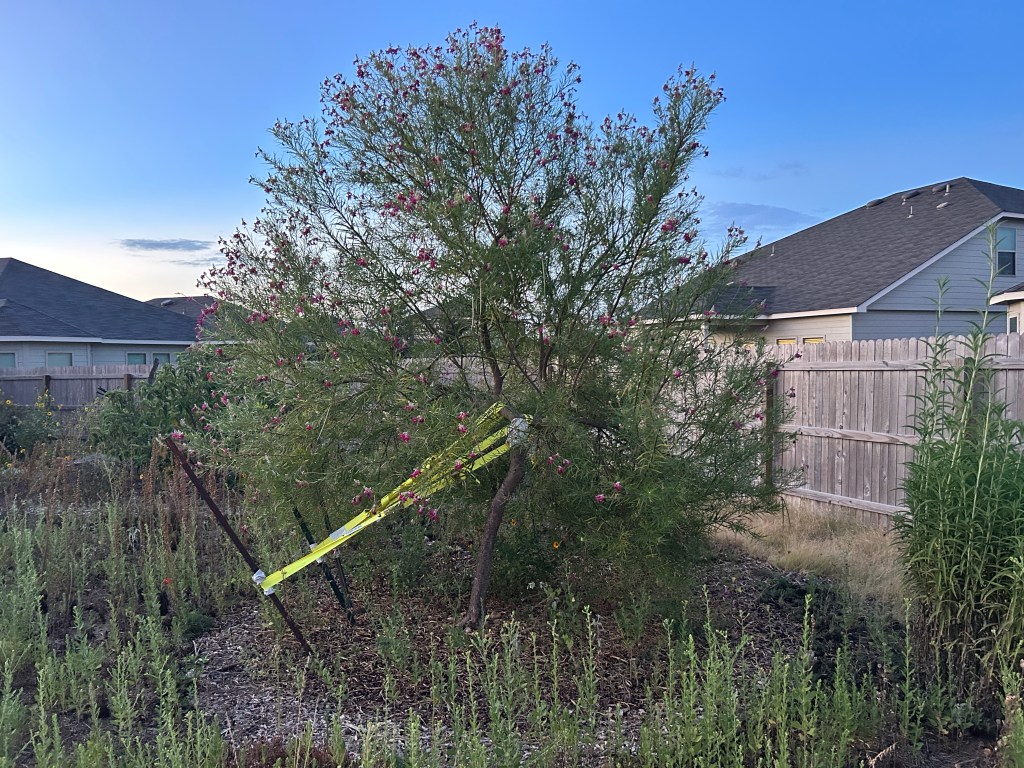
My Desert Willow (Chilopsis linearis) tree is a prominent feature in the garden. It has grown well and is already more than 12 feet tall.
A challenge I have faced with this tree, however, is that sometimes wind events have caused branches to split, and even for the whole tree to tip over.
When branches have sheared, I removed them to prevent the splits progressing further. At first, I tried to repair them, but eventually concluded that a repaired split would always be a vulnerable location for future damage. Instead, I consider split branches and the consequent pruning as part of the tree’s unique life story.
The leaning tree was a more serious issue. At first, I used a brace to push the tree back up, and then I changed to using a group of three stakes to pull it upright.
When the Desert Willow was staked, in April 2026, I expected to keep the stakes in place for at least a couple of years. I noted at the time that the webbing straps might need to be replaced sooner than that if they started to cut into the trunk. To my amazement, the tree has increased the girth of its trunk so much that this was happening just three months later.
Here were the straps in April 2026.
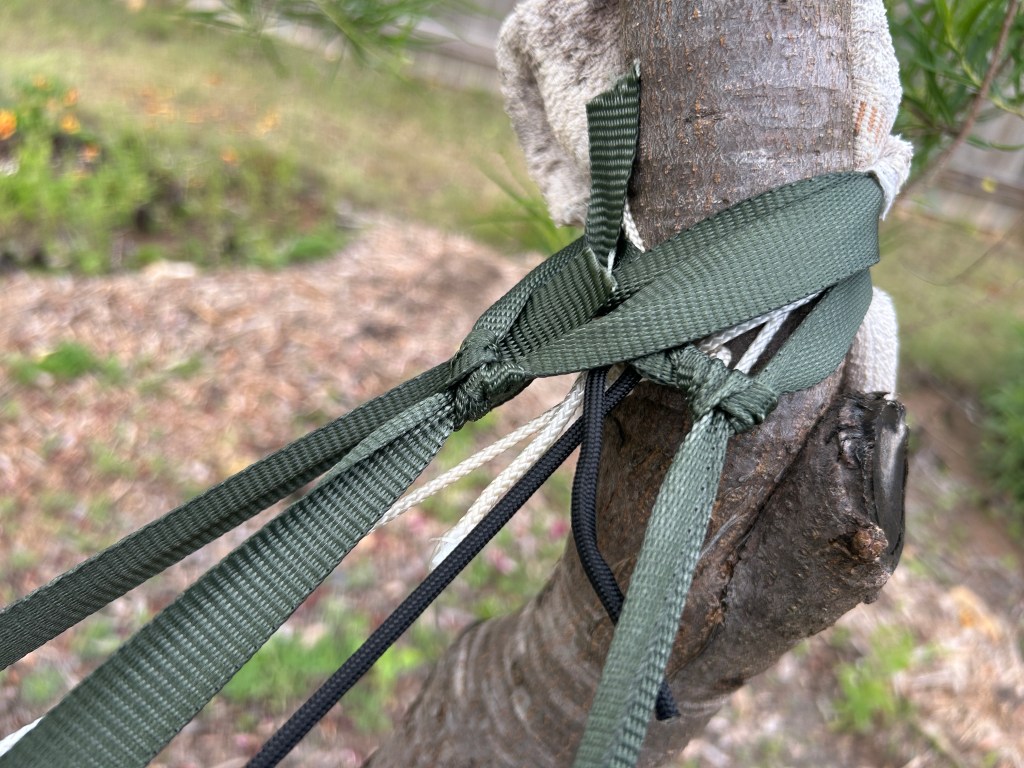
And here were the straps in August 2026. I had no idea that the trunk would thicken that fast.
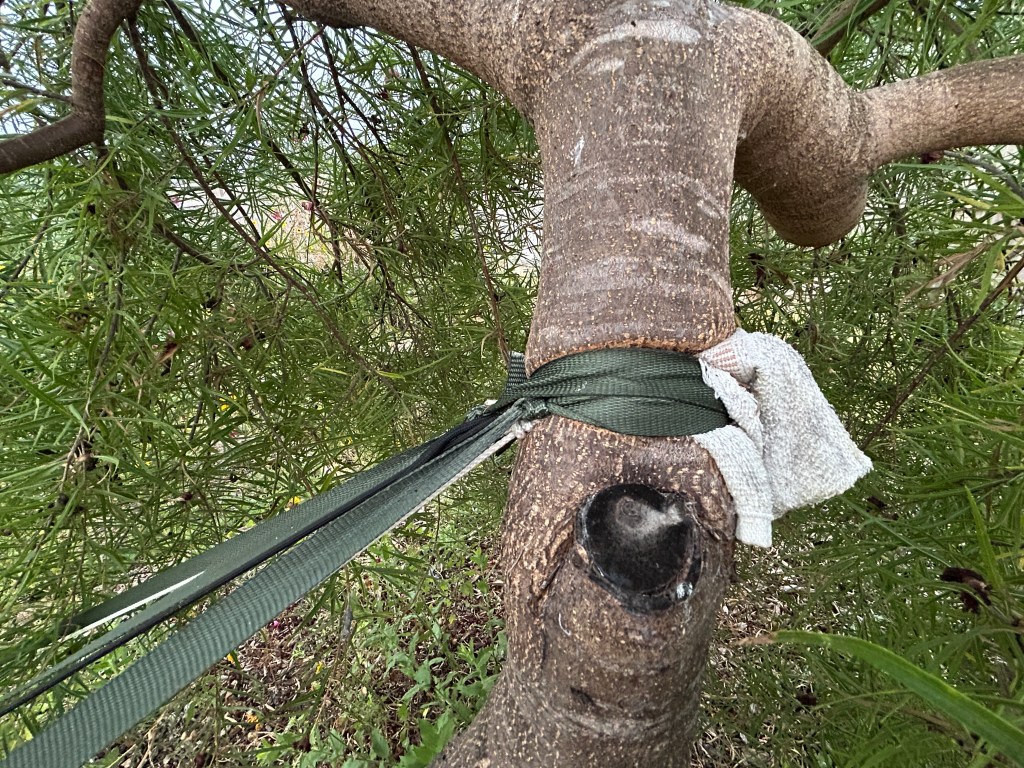
As soon as I noticed this, I cut the straps away.
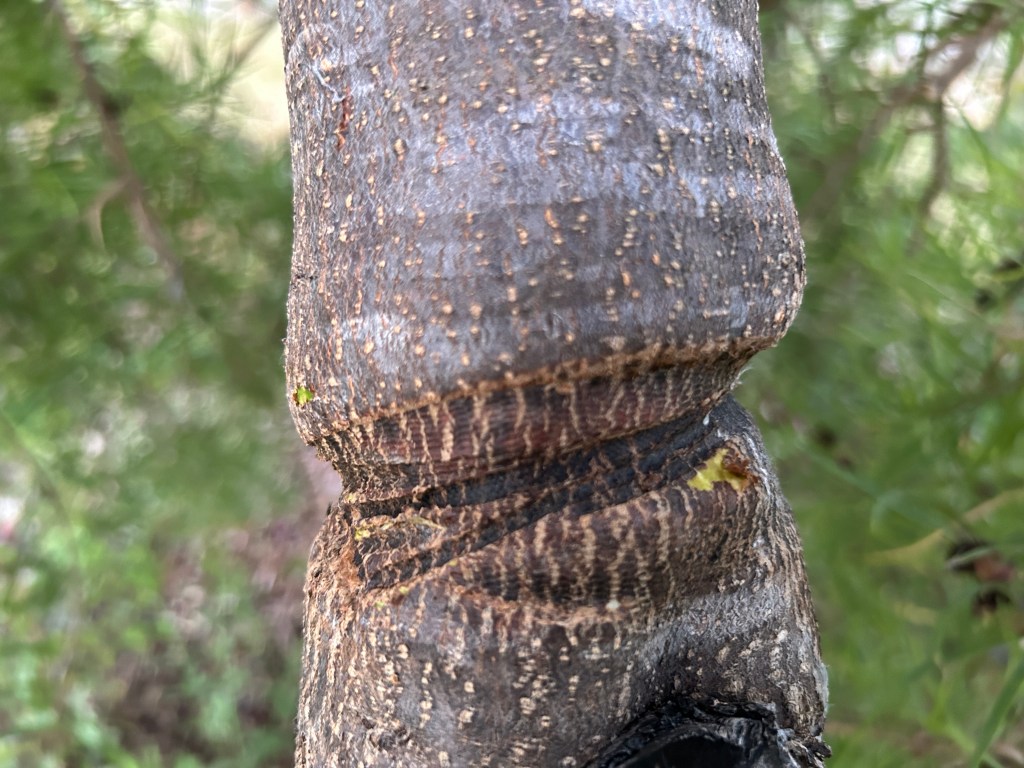
Clearly I made two mistakes when attaching the Desert Willow to its stakes in April. One was to tie the webbing too tightly — I thought that I had left room for growth, but I greatly underestimated that. And the second mistake was not checking the anchor point often enough — the damage would be less if I’d caught it sooner.
I don’t believe that this damage will prevent future development of the tree, but that mark may remain as a reminder of my mistakes!
The next challenge was to find a way to retie the stakes to the tree in a way that is both secure and able to accommodate growth.
The original webbing that I used was less than an inch wide. I decided this time to use wider 2-inch straps and to have them pass around the tree instead of tying a smaller loop around the tree. Another upgrade was to purchase ratchet straps to make the installation easier and adjustable, although I would have preferred them in a less vibrant color than the bright yellow that they are.
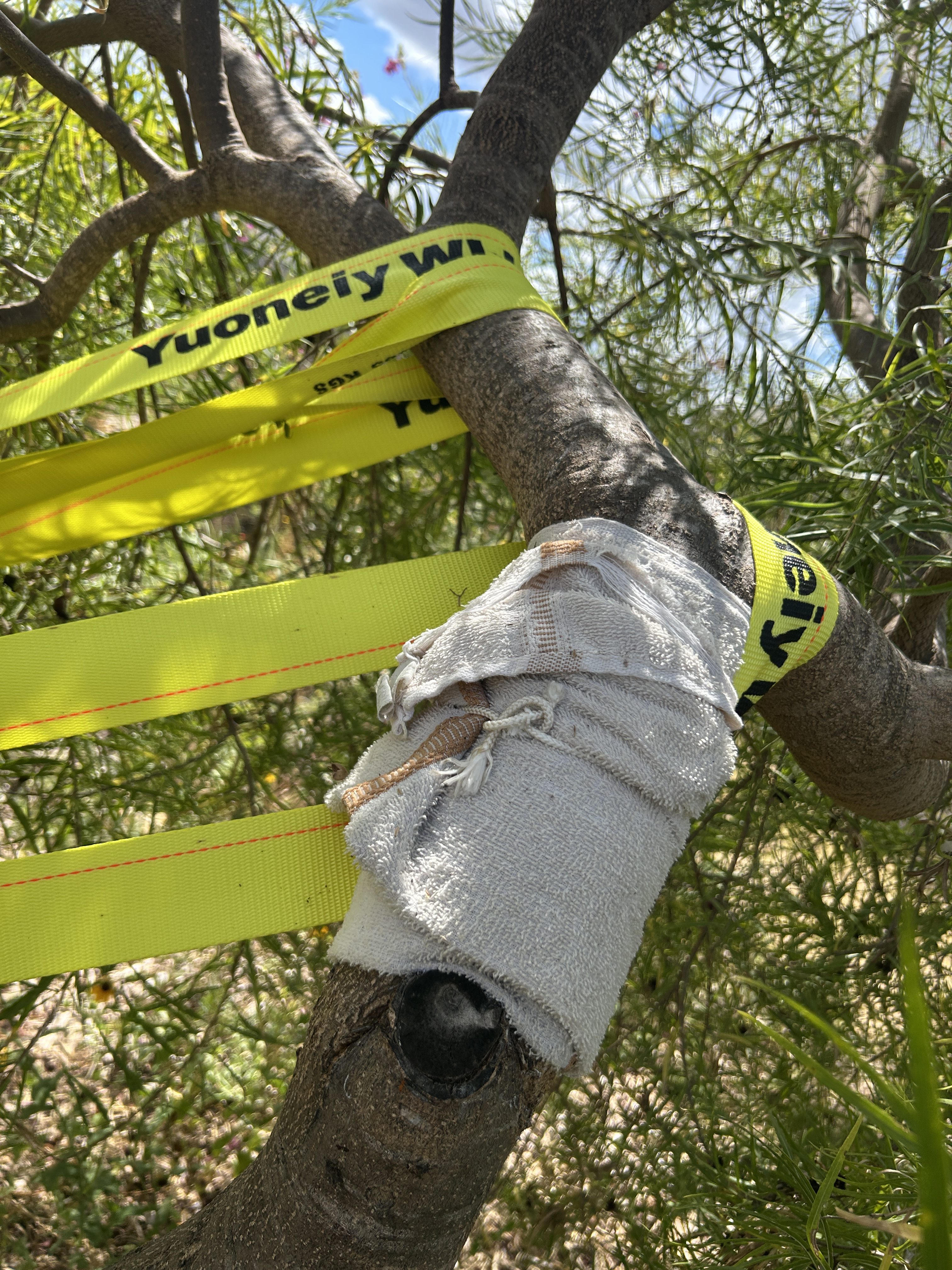
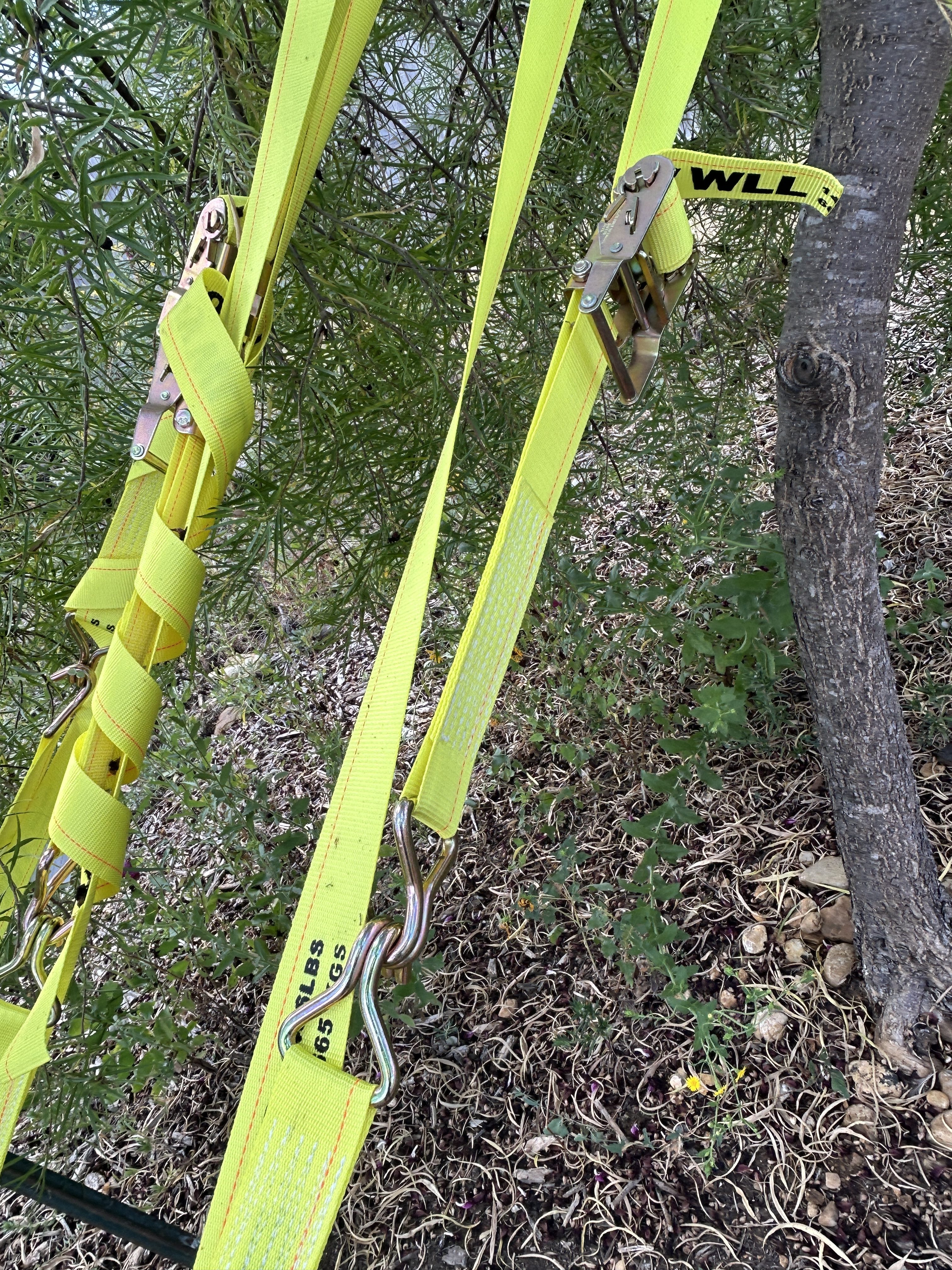
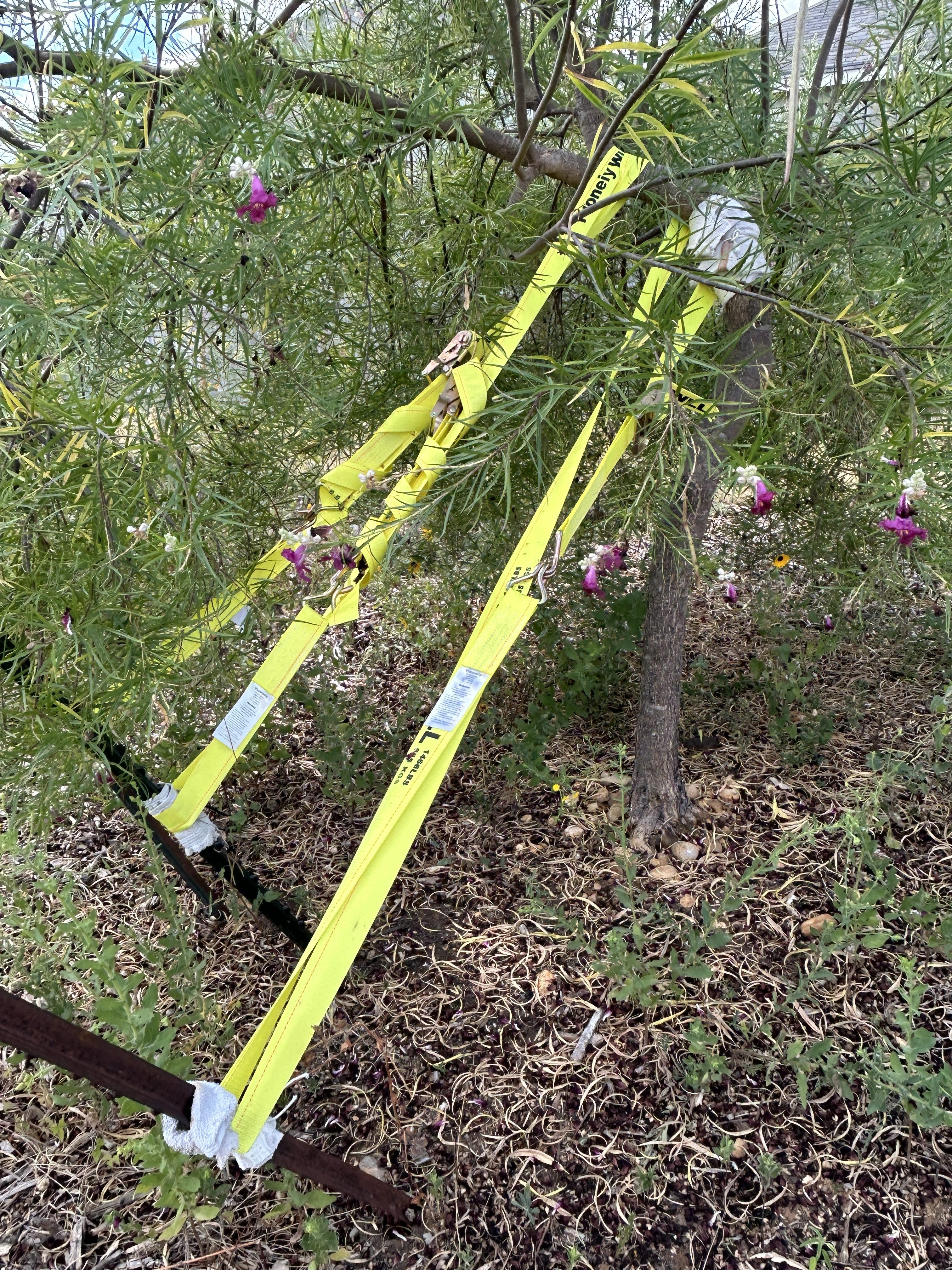
So here’s the new set-up…
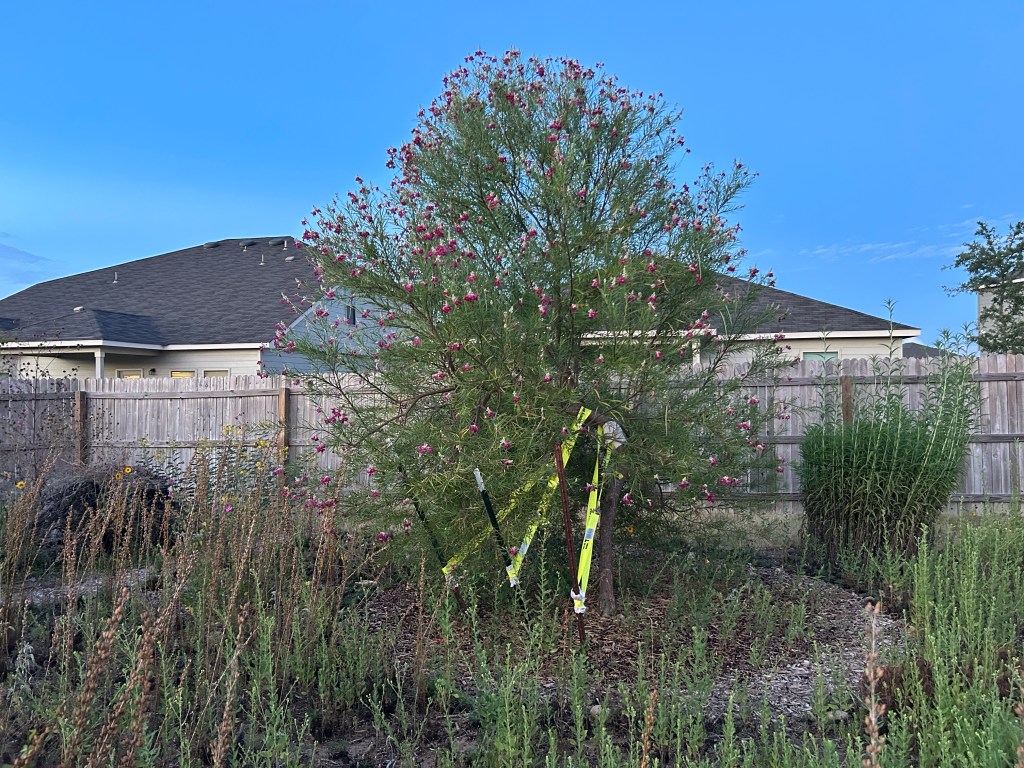
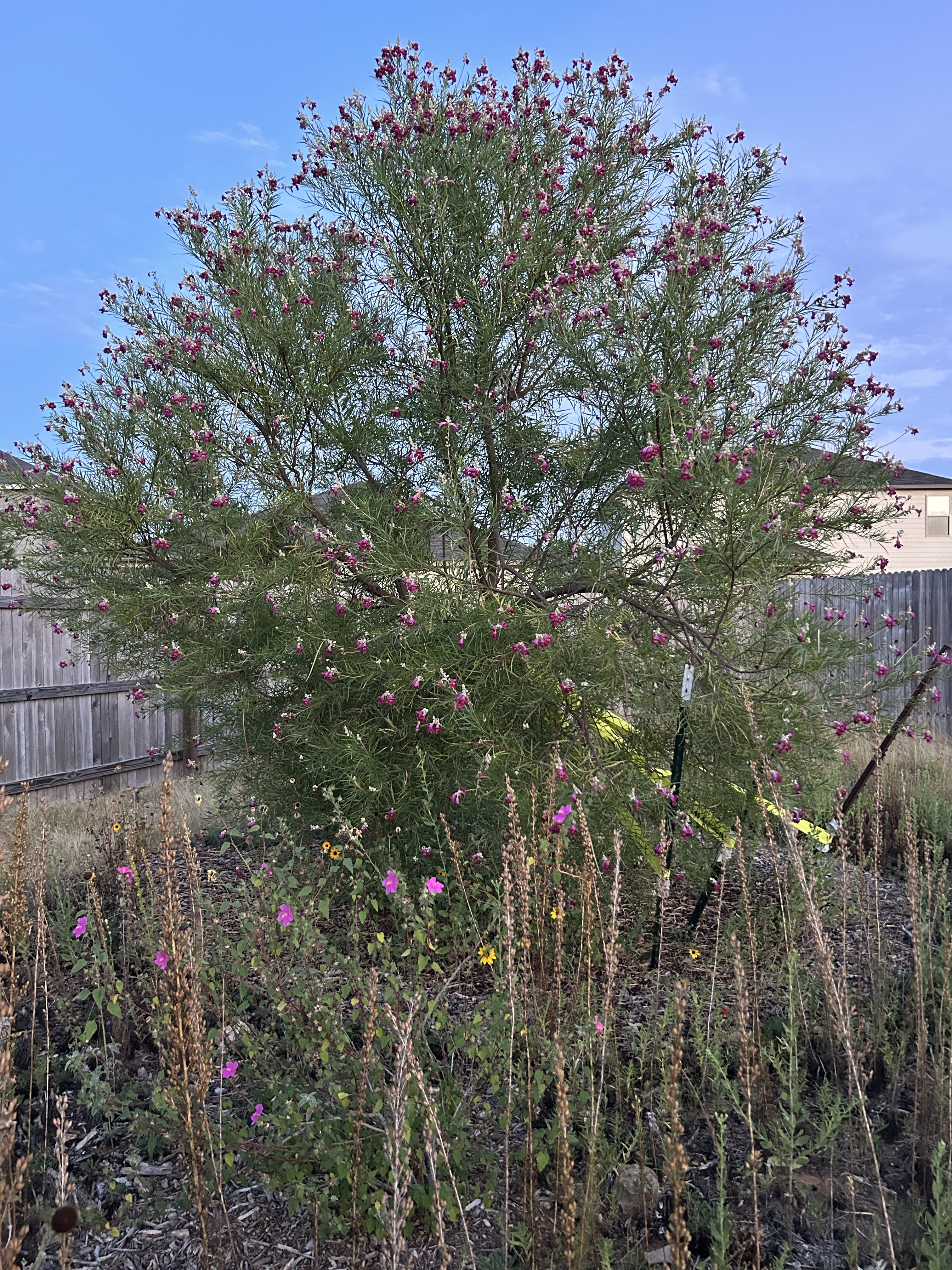
Despite the heavy pruning and support structures, this is a beautiful tree. During the summertime when there is a lot of lush growth, you would never know that there are oddly shaped branches under the leaves. Frequent feeding visitors include hummingbirds and large bees, and many other creatures use this tree for shelter, shade, or foraging for insects.


Leave a Reply