When I started building this garden, I filled all the blank spaces with wildflowers. The idea was that as other more long-term plants or features were added, I could clear away the wildflowers to make room. In the meantime, those temporary plants have been feeding wildlife, and protecting and nourishing the soil. The protection comes from shading the soil and reducing erosion, and the nourishing comes from organic material from finished annual roots underground and mulch made from finished annual plants.
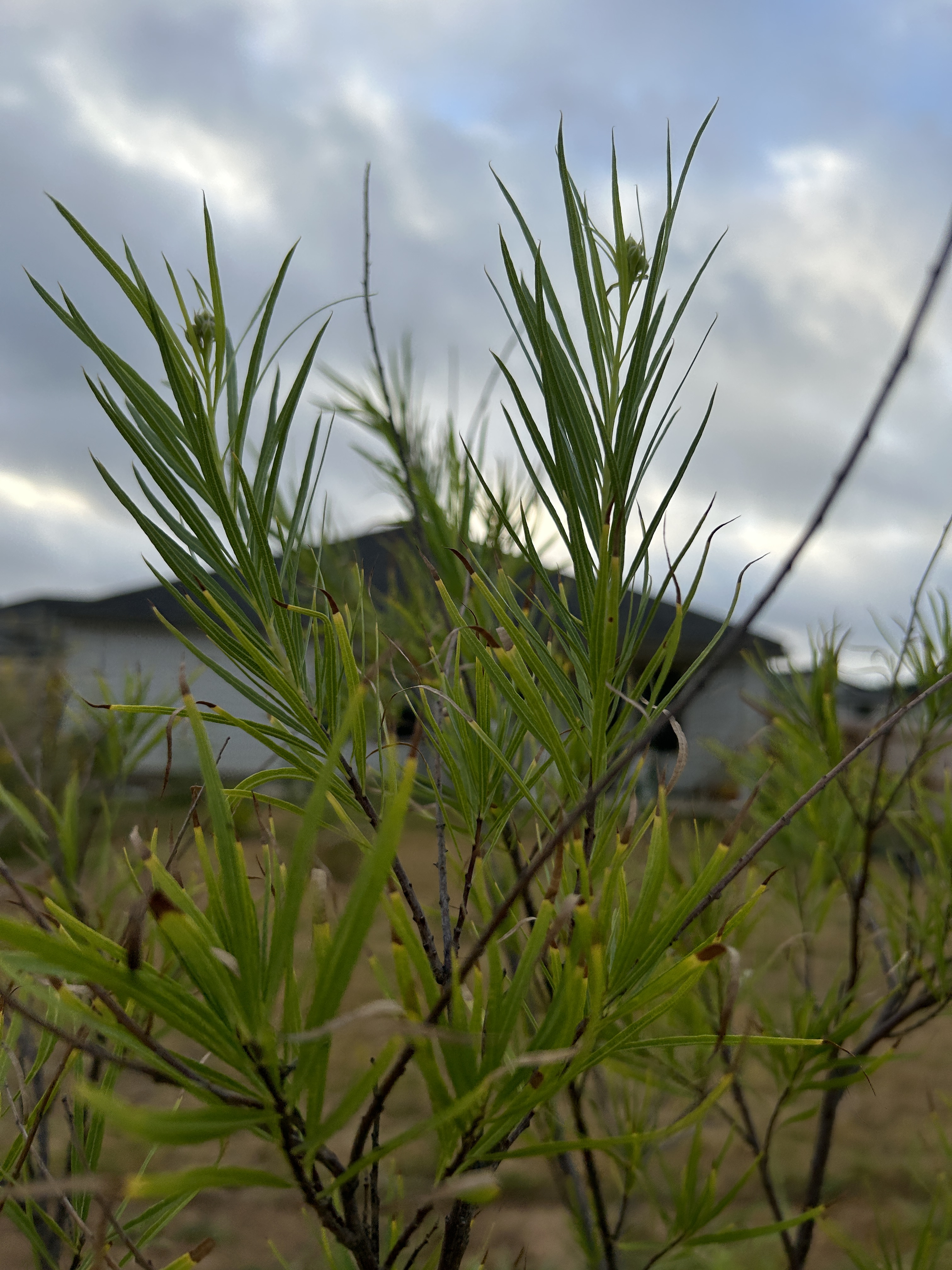
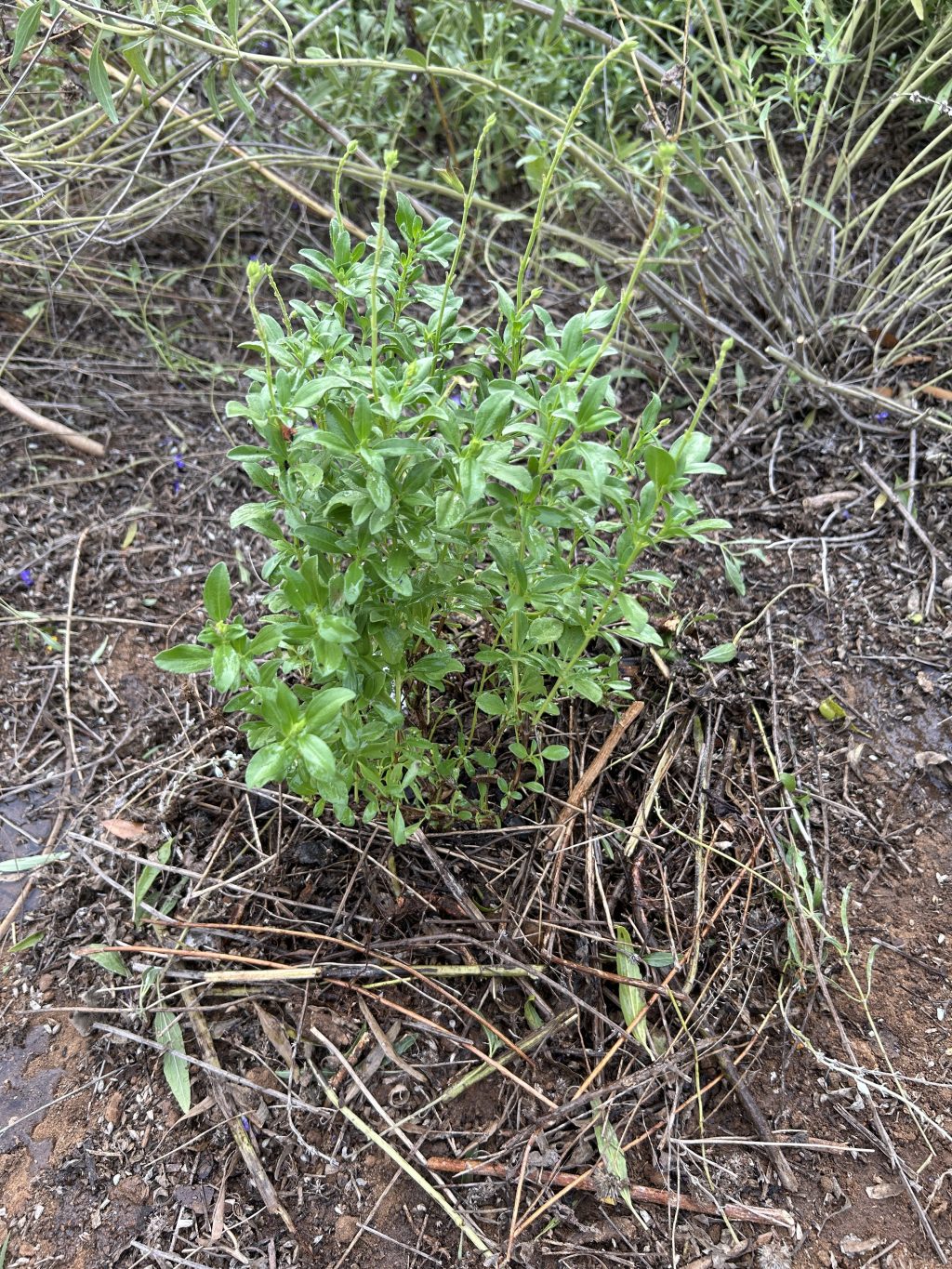
Along one side of the garden I wanted to have a row of shrubs that would particularly attract pollinator insects, and I had room for four such plants. Last year I planted Kidneywood (Eysenhardtia texana) at one end of that strip and White Mistflower aka Shrubby Boneset (Ageratina havanensis) at the other. I have just added Gregg Salvia (Salvia greggii) and Fragrant Mistflower aka Crucita (Chromolaena odorata) to the two middle spots.
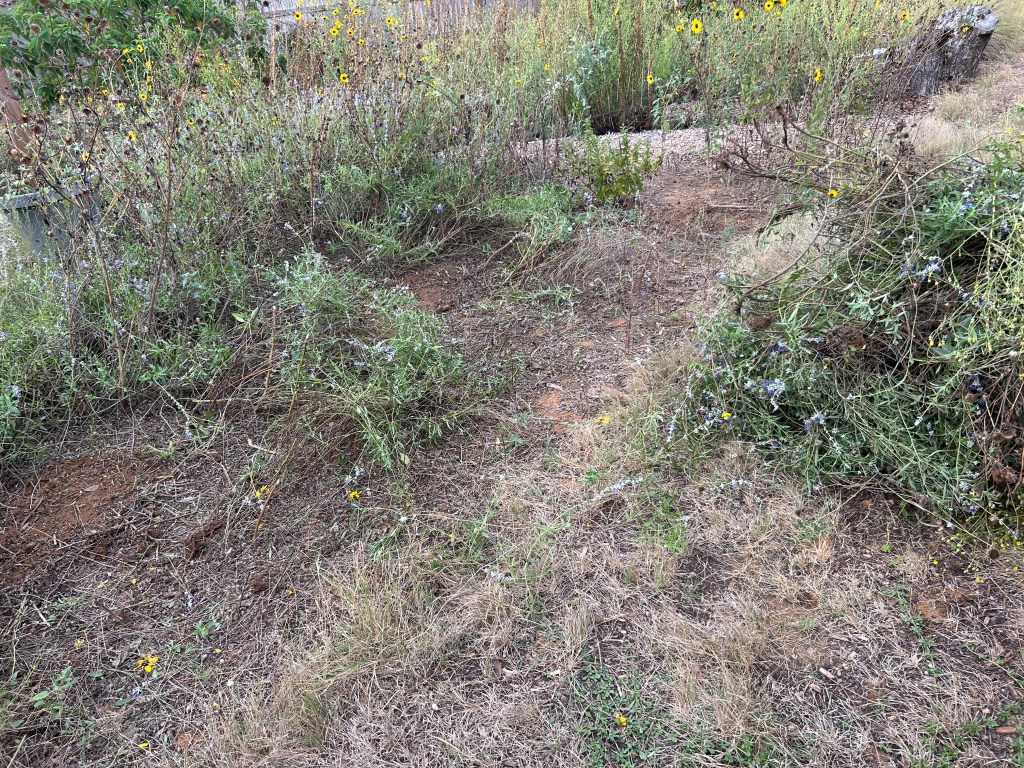
To make room for the two new shrubs, I needed to clear away Mealy Blue Sage (perennial) and sunflowers (annual). These cut down plants will be shredded and added back to the garden as mulch. The Mealy Blue Sage were seeded in the first year here and the sunflowers arrived on their own. Both appear to be very happy in my environment and are continuing to seed themselves in other places, so I have no concerns about clearing this area. They are both good food sources for birds and pollinators late into the year, so they are welcome here!
Here’s the area after I had carved out two areas for the new shrubs, with the nearby pile of removed plants that will be shredded once they are dry and I have the energy. In this photo, the pile is sitting on the Thunder Turf native grass perimeter, which is looking a bit crispy after the hot summer, but it will green up again.
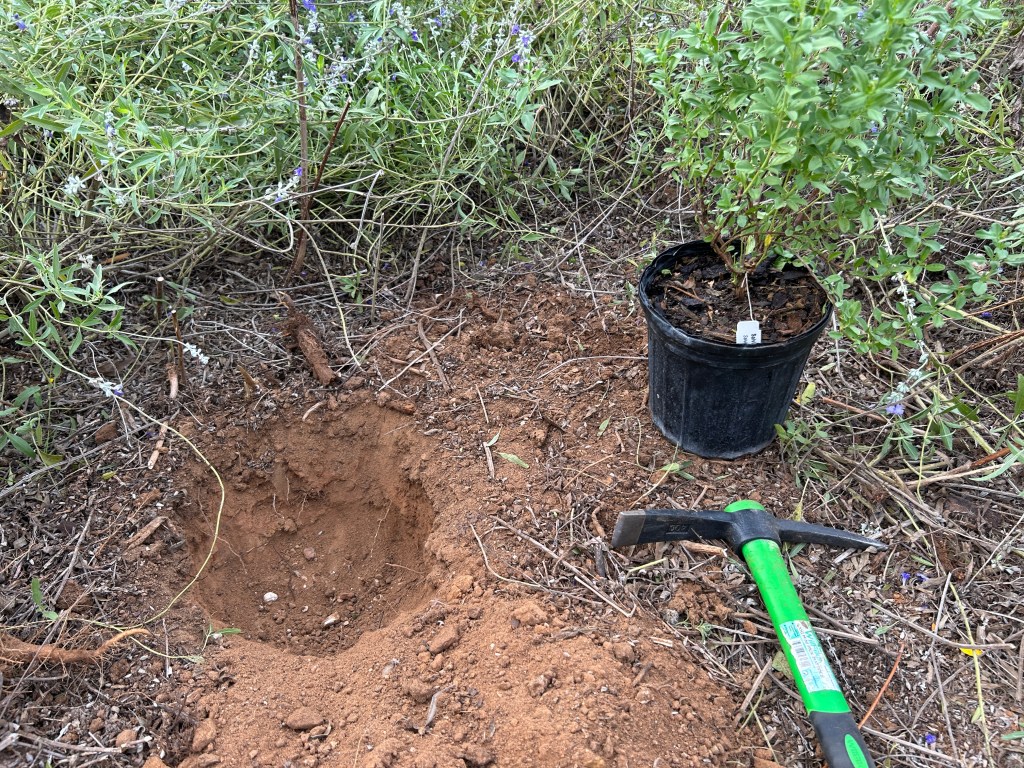
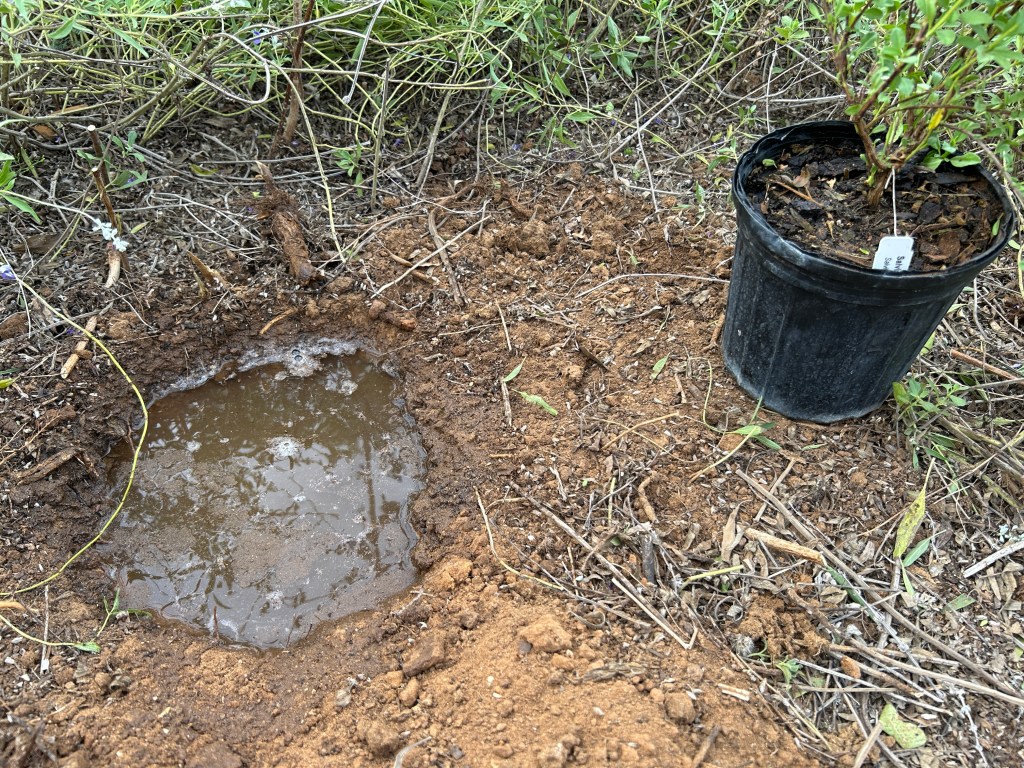
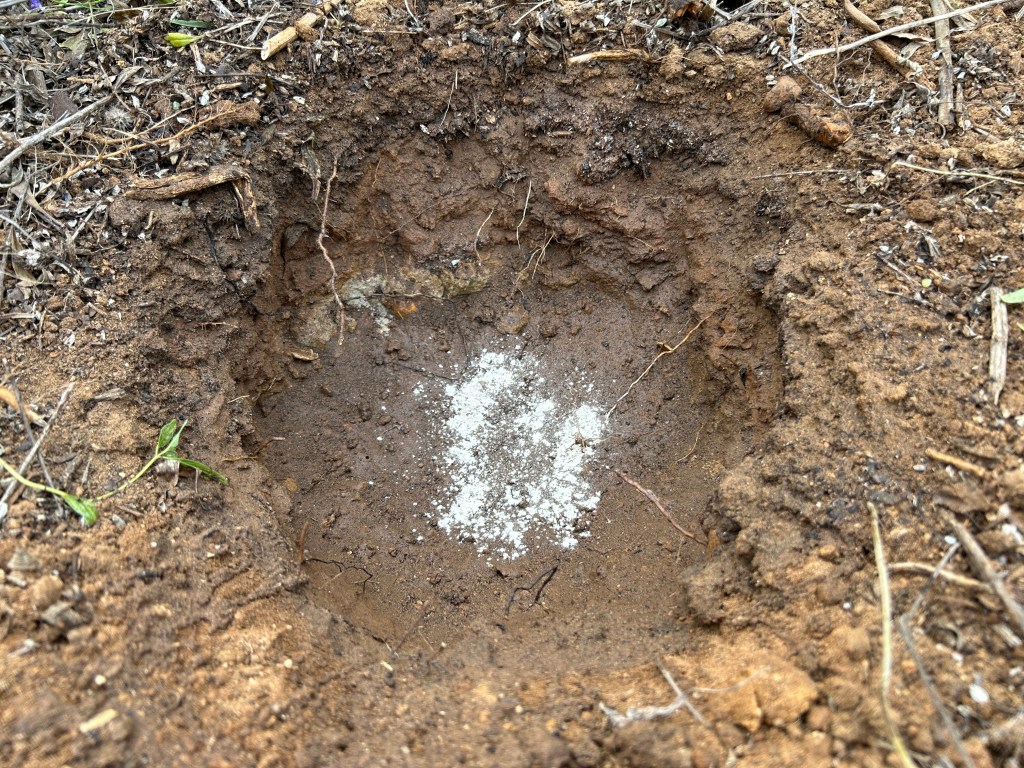
Here are photos of the Gregg Salvia being planted. I dig a hole only as deep as the pot soil, but wider. Then I fill the hole with water and let it drain out. A sprinkle of mycorrhizae (a fungal root stimulant) goes in the hole next, and then the plant and more watering.
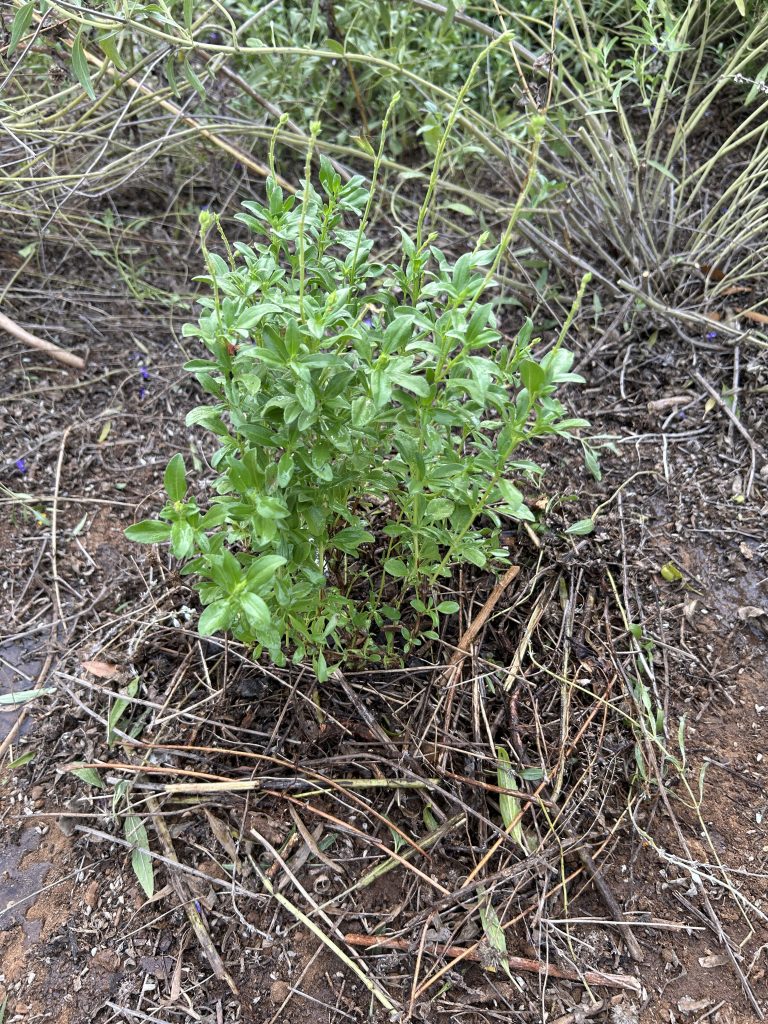
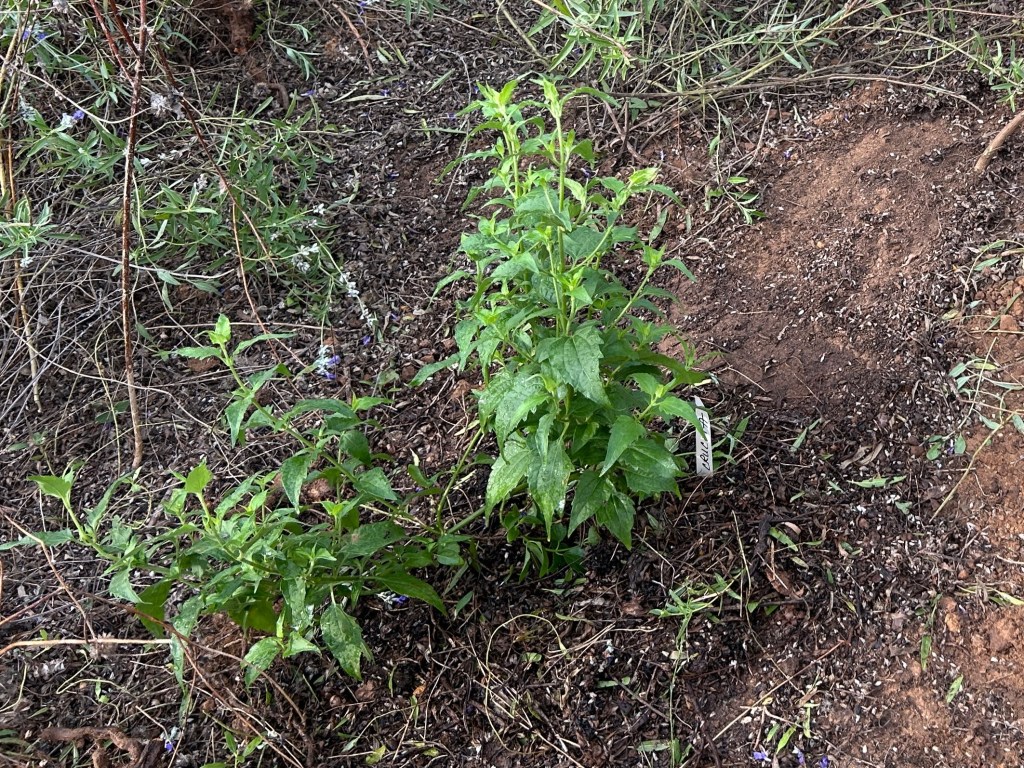
And here’s the Crucita after planting.
I was able to get this planting done a couple of days before we got 2 inches of rain, so I’m sure they were happy about that. Here they are a week after planting the middle two in the row. With your back to the fence, here they are from left to right.
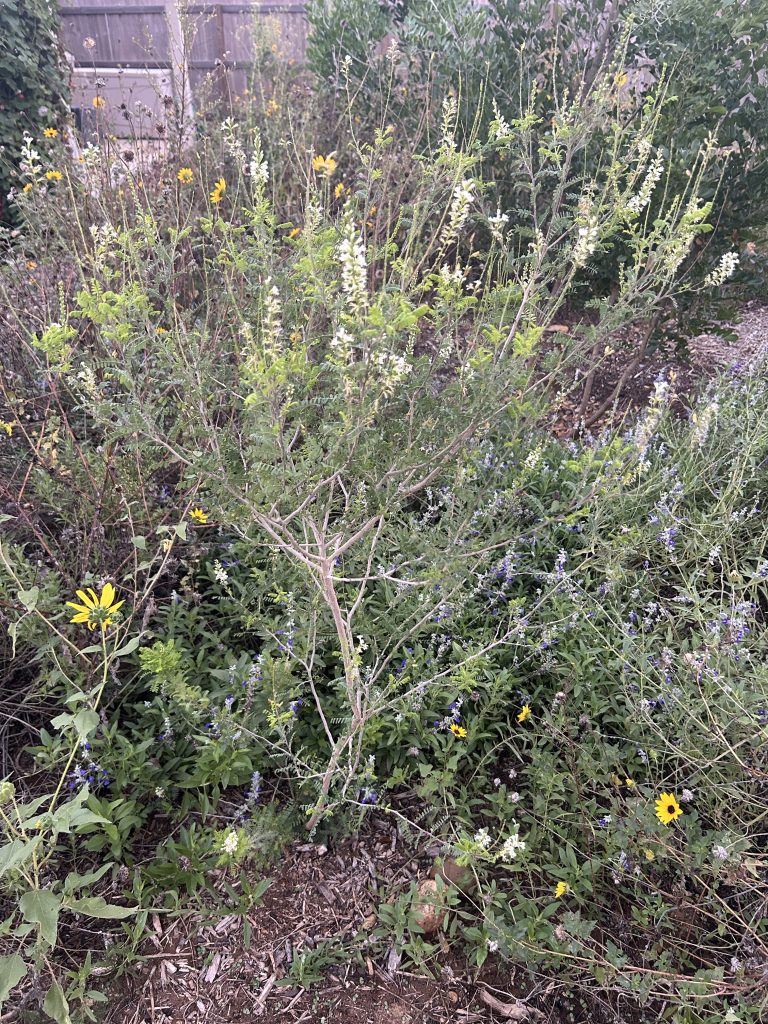
Kidneywood (Eysenhardtia texana). It’s hard to discern the height in this photo, but this is already over 4 feet tall.
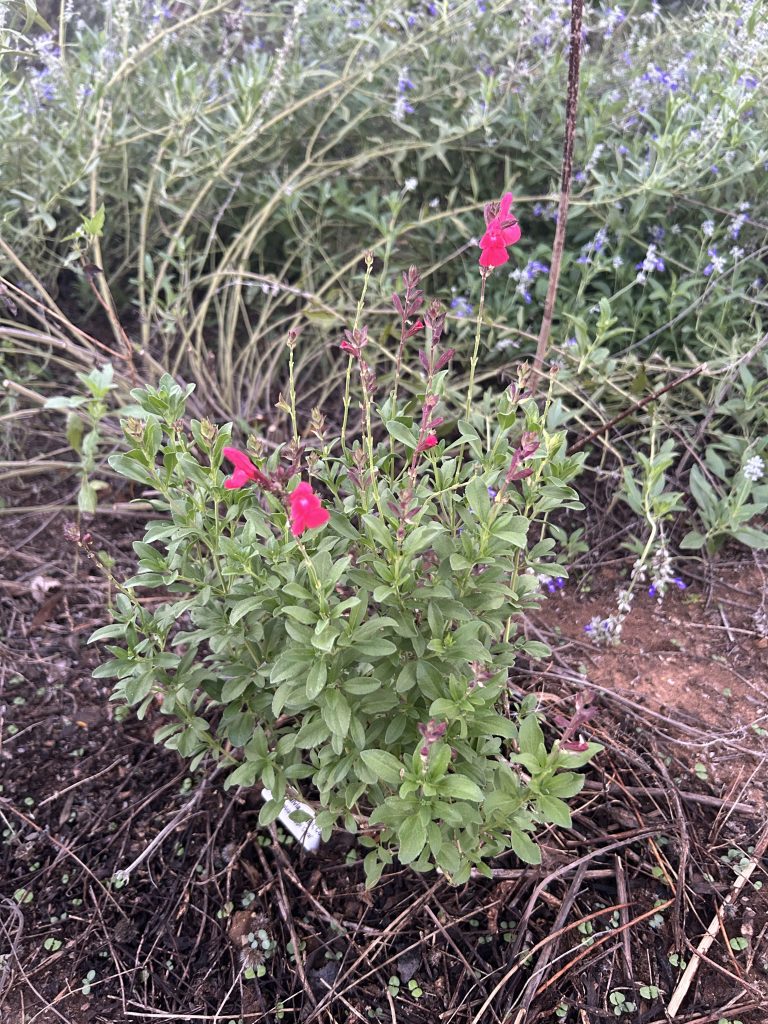
Gregg Salvia (Salvia greggii). This one has coral colored blooms, already appearing just after planting!
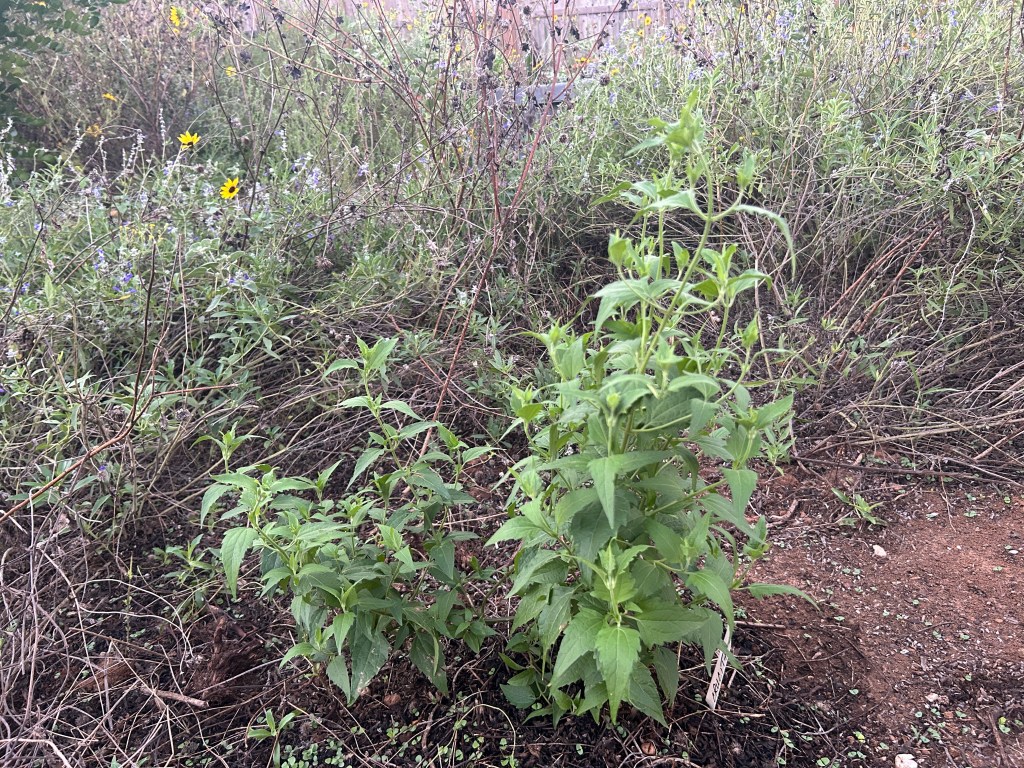
Fragrant Mistflower aka Crucita (Chromolaena odorata).
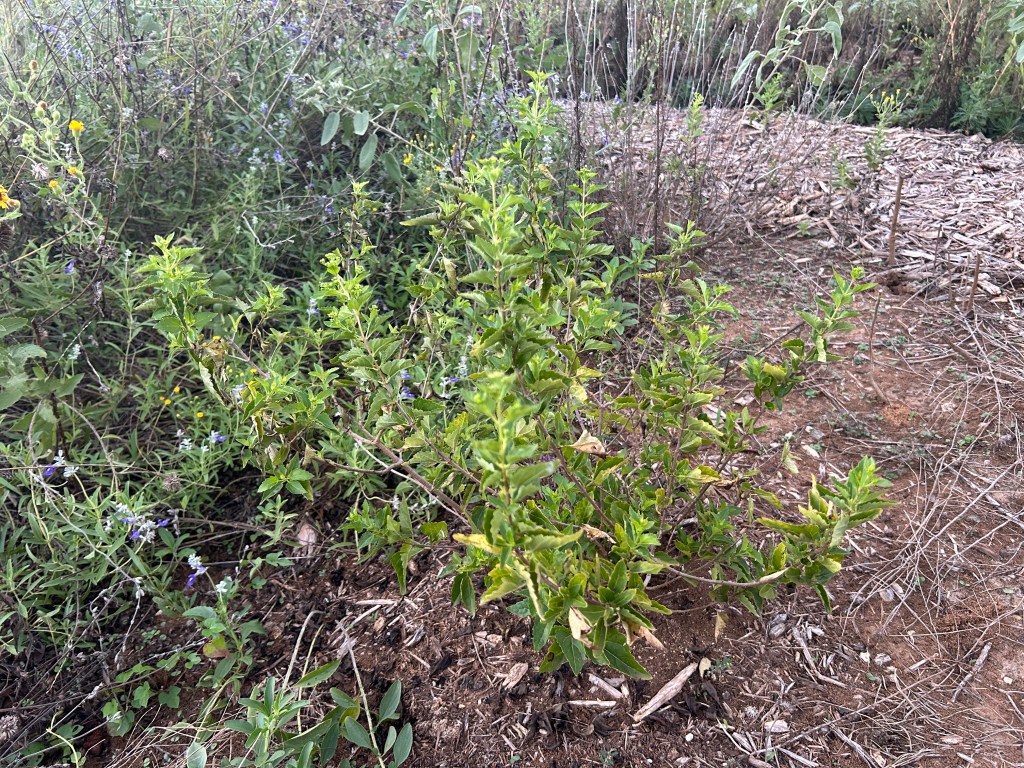
White Mistflower aka Shrubby Boneset (Ageratina havanensis). This one has a few crispy leaves from our summer heat, but it’s getting ready to bloom soon.
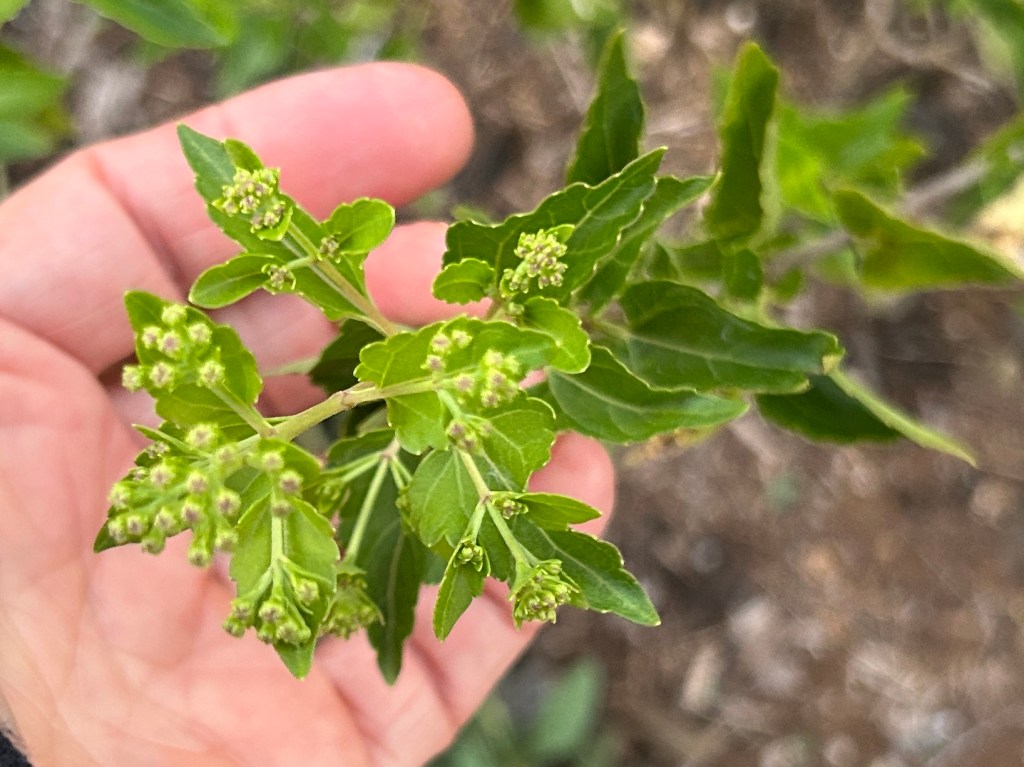
Each of these shrubs should grow to be several feet tall and form a sort of pollinator-attracting hedge on that side of the garden. They all have long blooming seasons, and nectar availability in the fall is especially helpful for migrating insects and birds.


Leave a comment