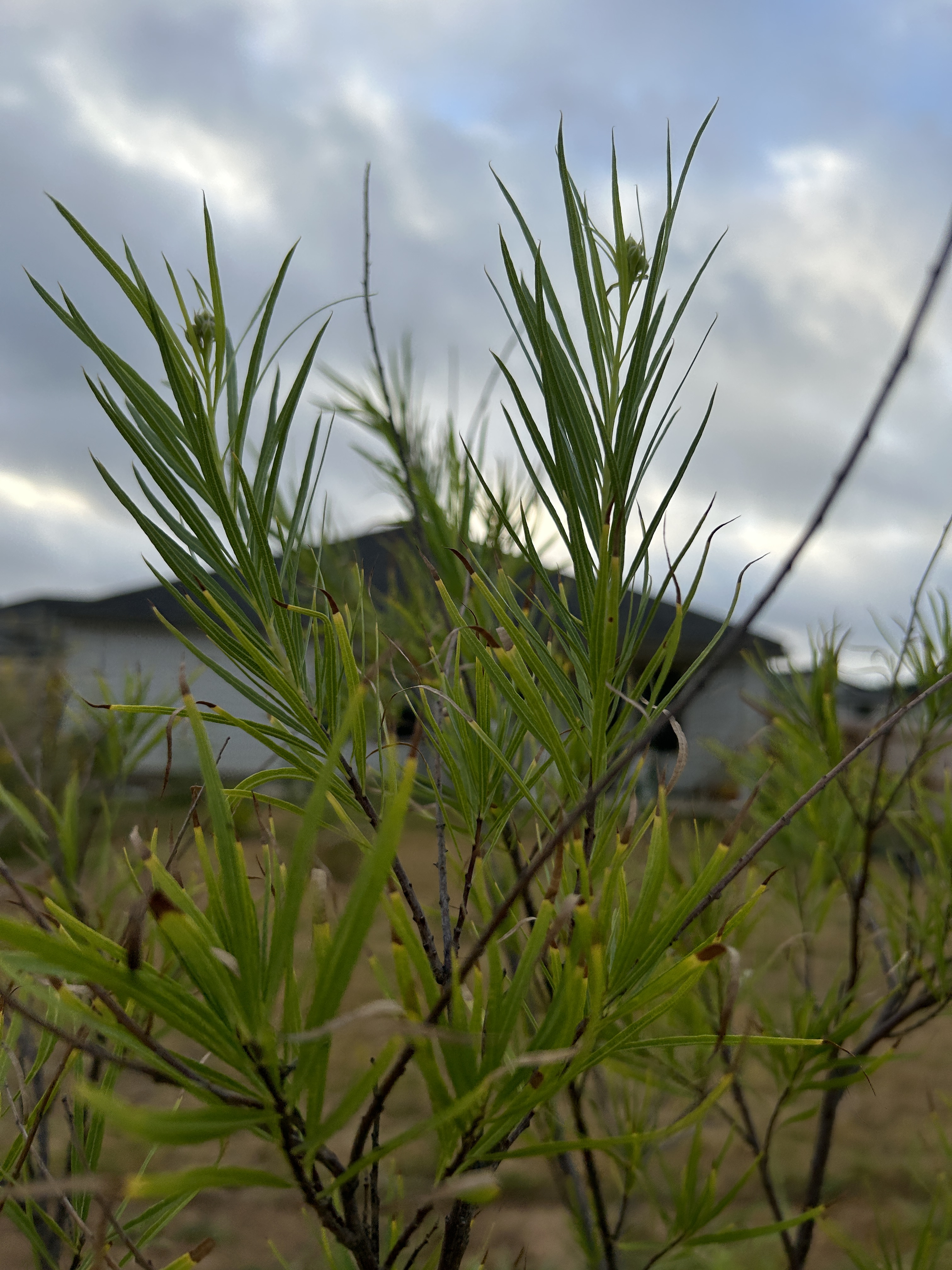
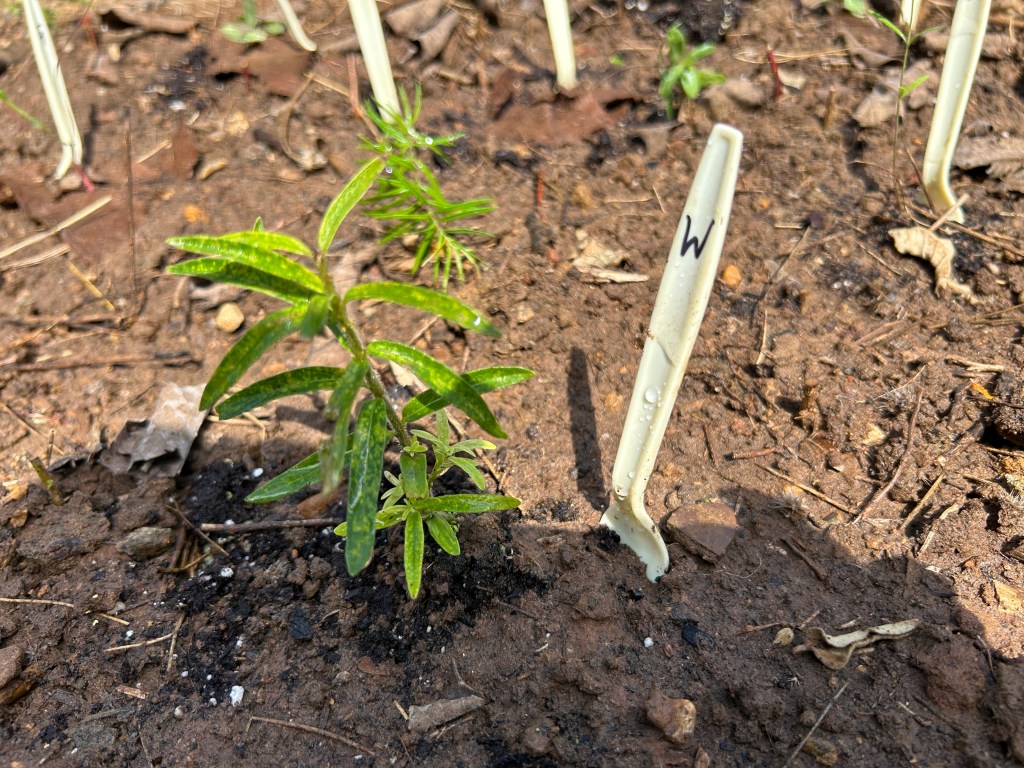
For two years I have been trying to get native milkweeds established in a patch at the far end of the garden. I’ve had little success, perhaps because the soil there is particularly prone to erosion when there are heavy rains. Certainly the plants that did grow there never got to be big enough to support hungry caterpillars.
I’m planning a major soil improvement project in that area now, which means that I won’t be able to have any plants there for about a year. In the meantime, I’m going to try to grow milkweeds on the other side of the garden to see if they’re happier there.
There is a small area behind the pond near where eventually I’d like to put another tree (one with winter berries for the birds). But at the moment, all that is growing there are annual wildflowers, which I was able to cut down for the year because they were finished.
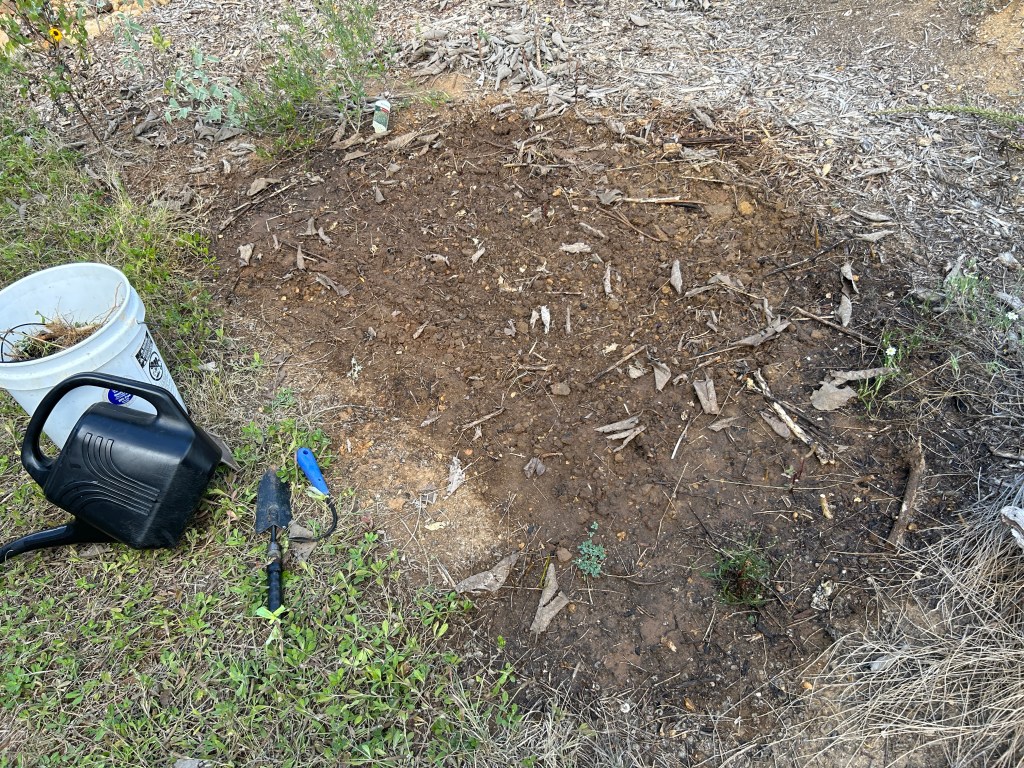
After the new area was cleared, I planted a collection of 16 very small milkweed plants that I got from our local Native Plant Society of Texas chapter. At the end of their sale day (I was a volunteer helper), I bought their entire stock of leftover milkweeds. These were Green (Asclepias viridis), Whorled (Asclepias verticillata), and Antelope Horns (Asclepias asperula) milkweeds.
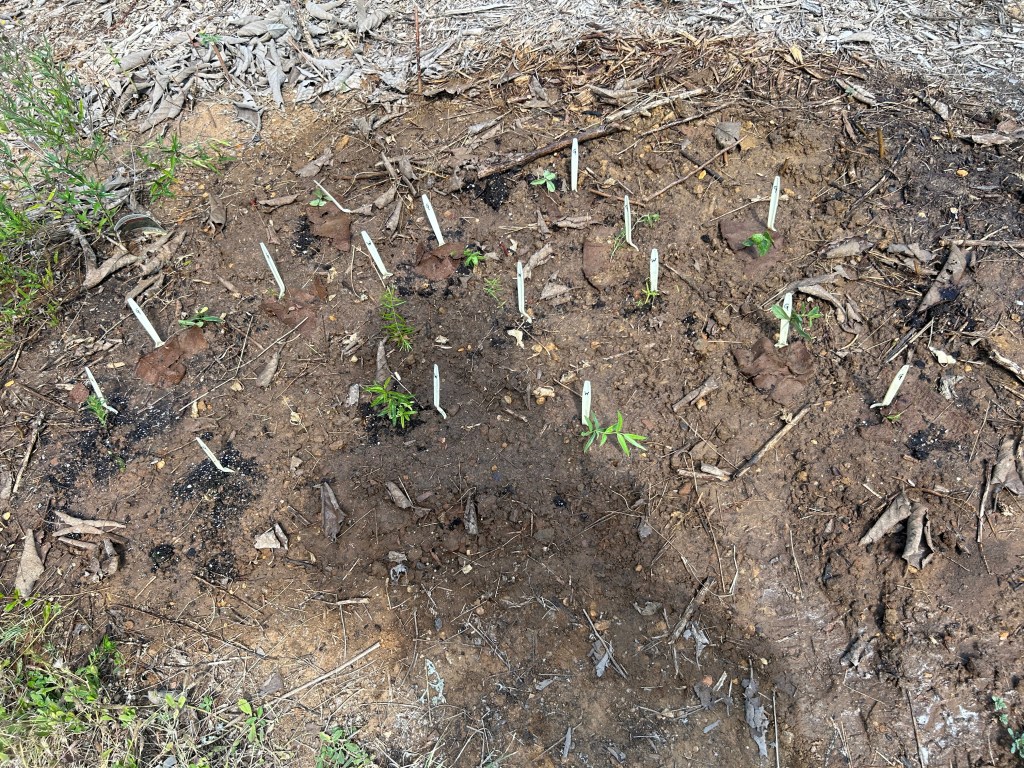
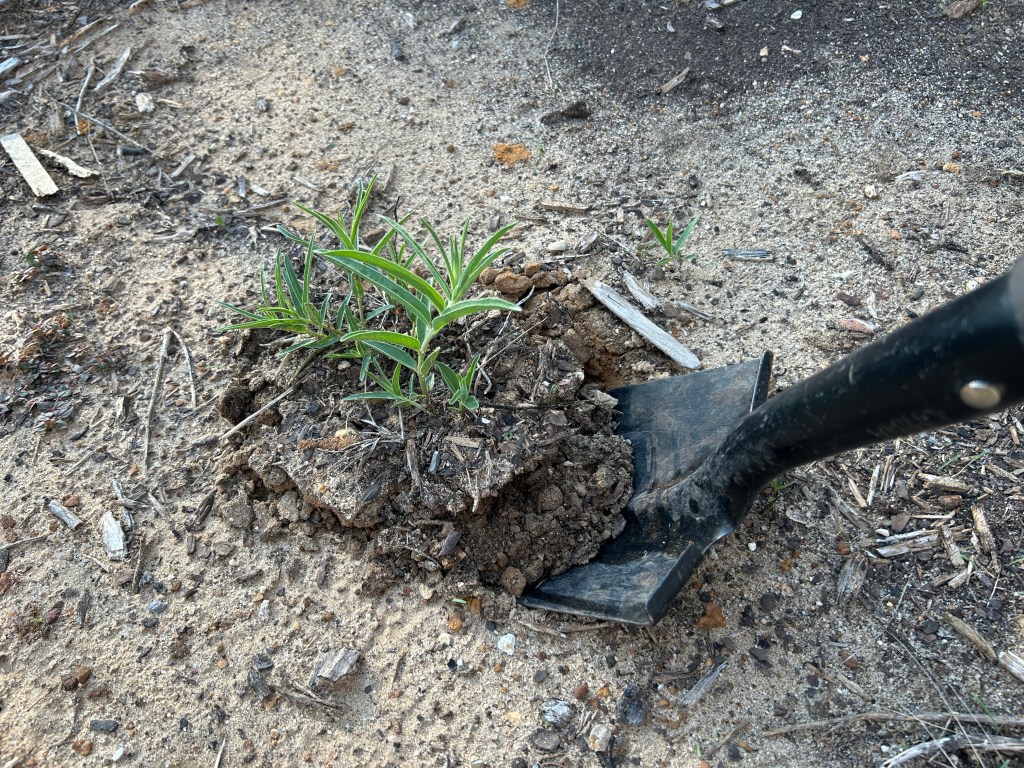
After a welcome two inches of rain, which softened the ground, I also transplanted what milkweed plants I could find in my original area. I have no idea if the transplants will survive, but they certainly weren’t growing well in their original location. There were ten small Antelope Horns — more than I expected because clusters that I thought were single plants were actually multiples. There was also one small Zizotes, but there are so many thriving volunteers elsewhere in the garden that I don’t need to preserve that one little one.
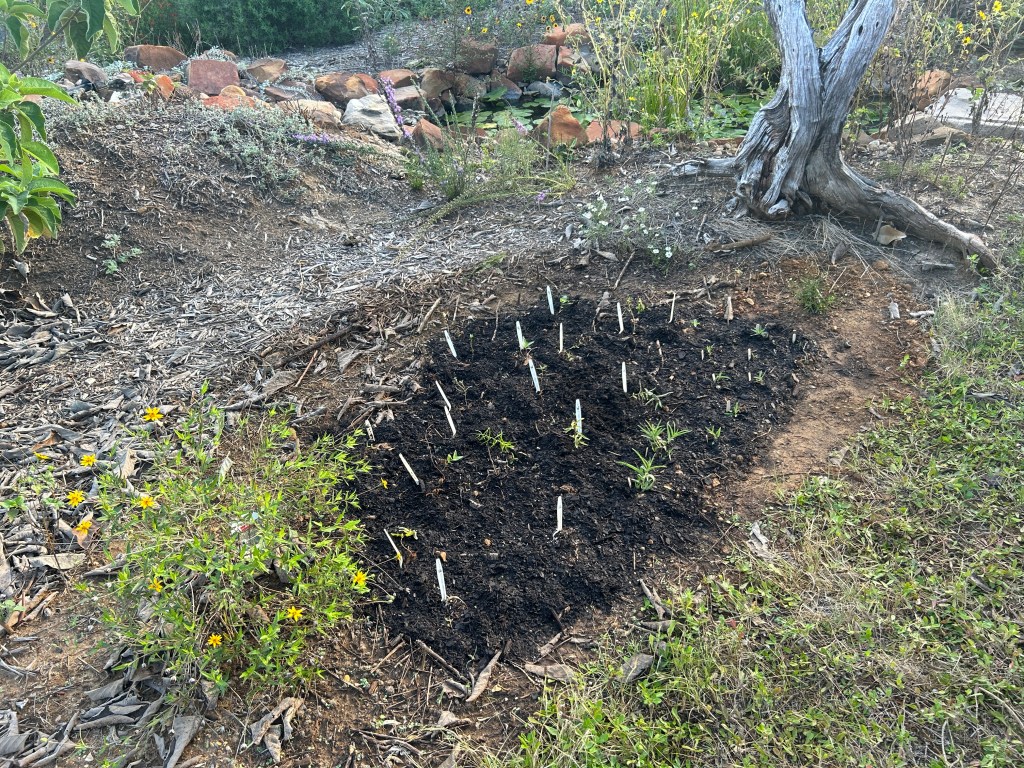
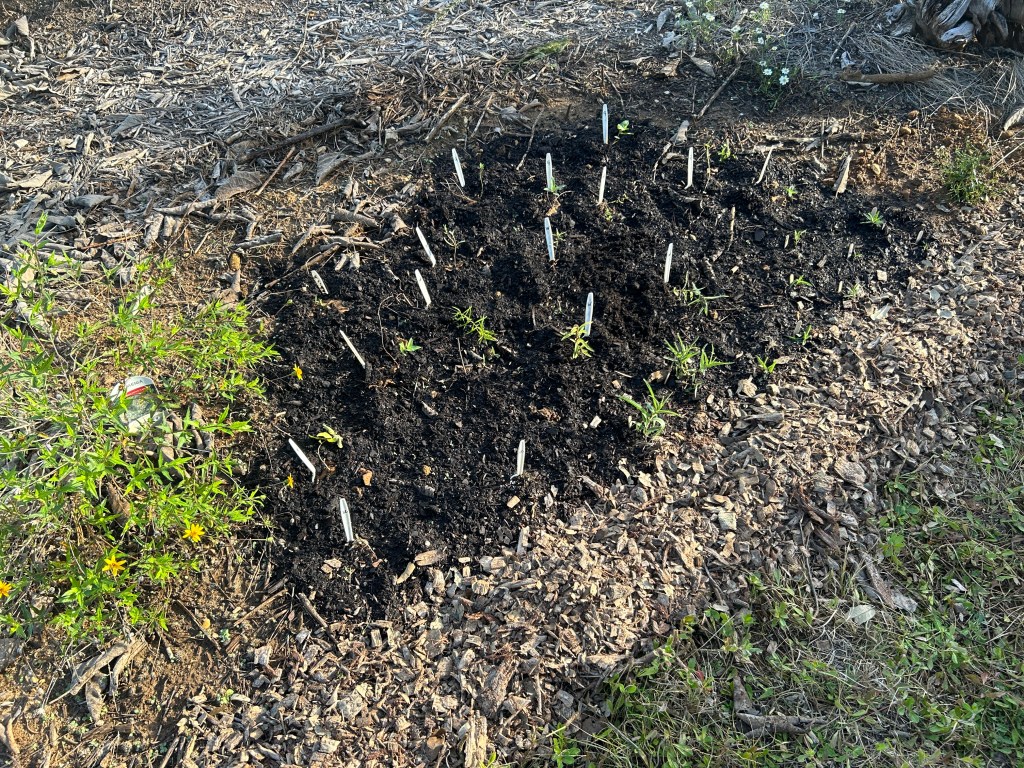
So here’s the new milkweed area after all the planting. All the plants are small and they’re rather close together. However, milkweed overcrowding has not been a problem here yet, and if that happens, I’ll deal with it then. Clustering these plants is an advantage for the Monarch and Queen butterflies, which both use milkweeds as host plants, so that there are multiple options in one location for egg-laying and caterpillar food.


Leave a Reply