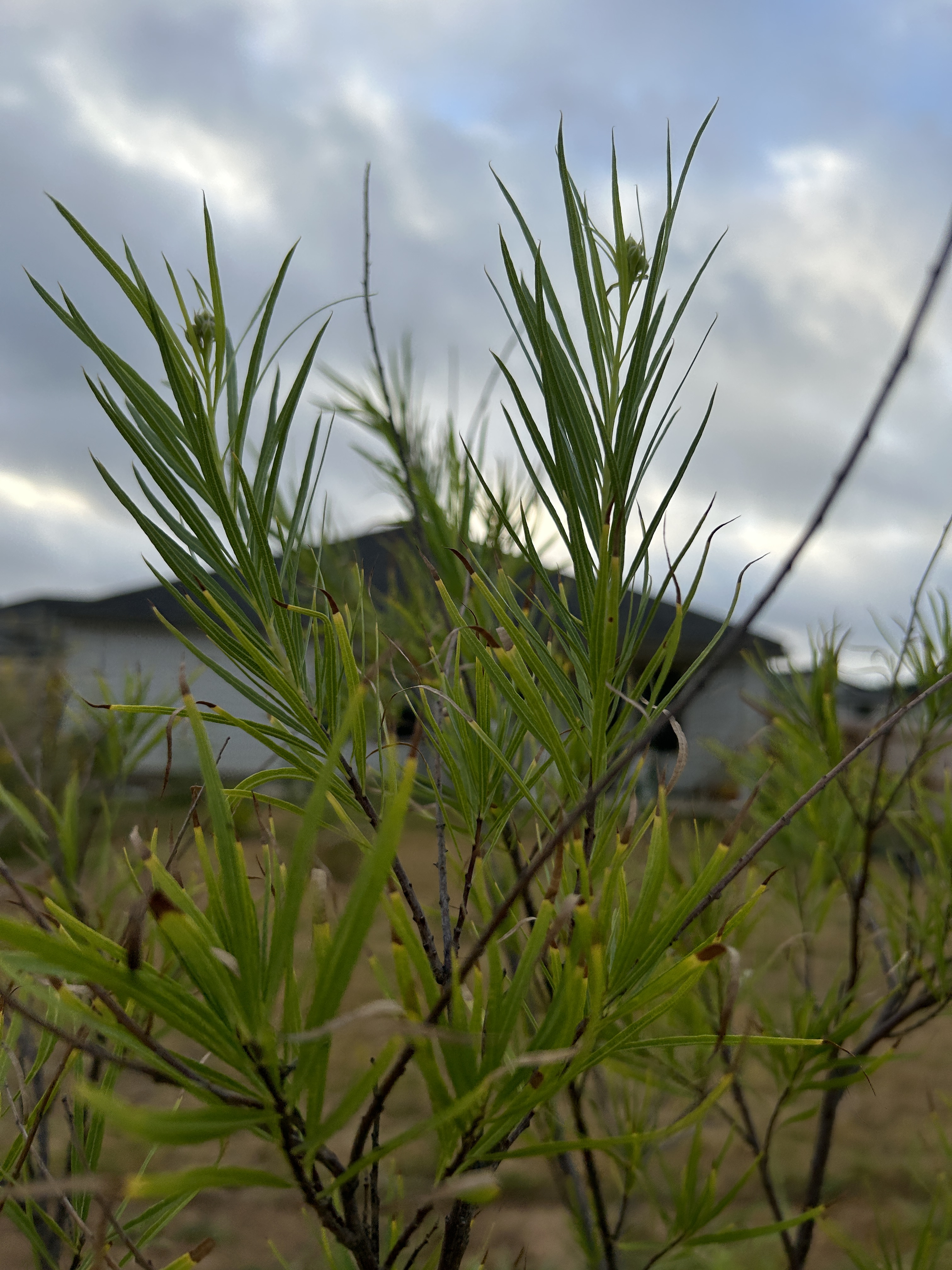
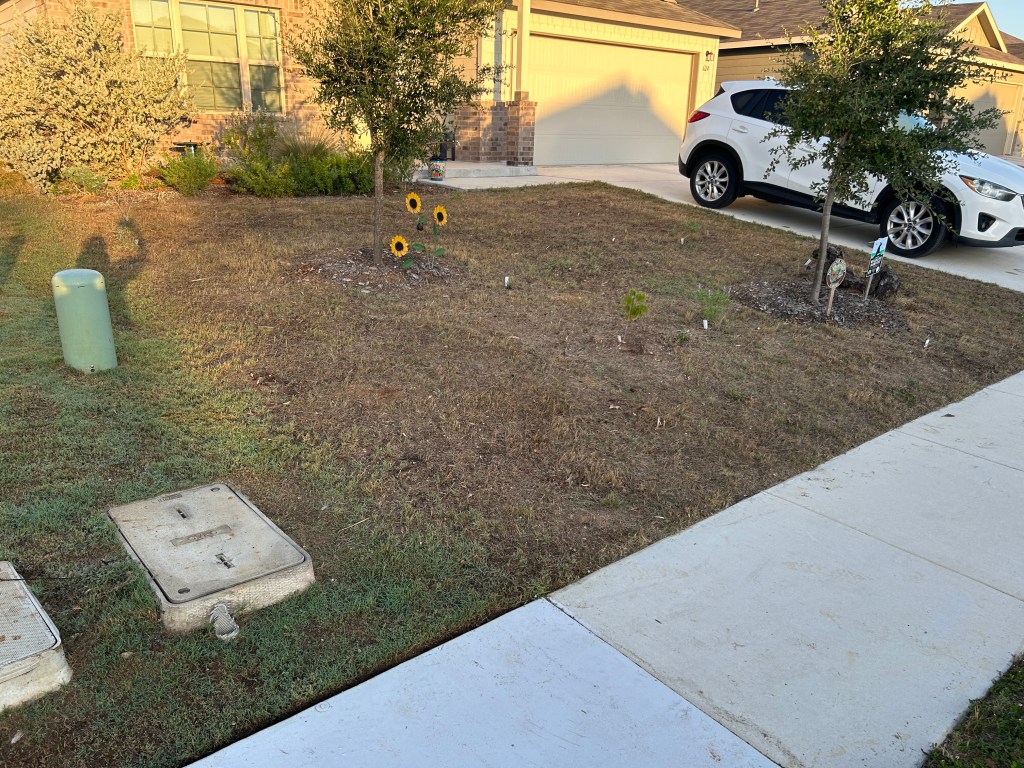
Sometime during the month of October each year, the wildflower meadow in front of the house is cut down and mown for its winter break. This is to give it a neater look for a few months, since it is in a publicly visible space.
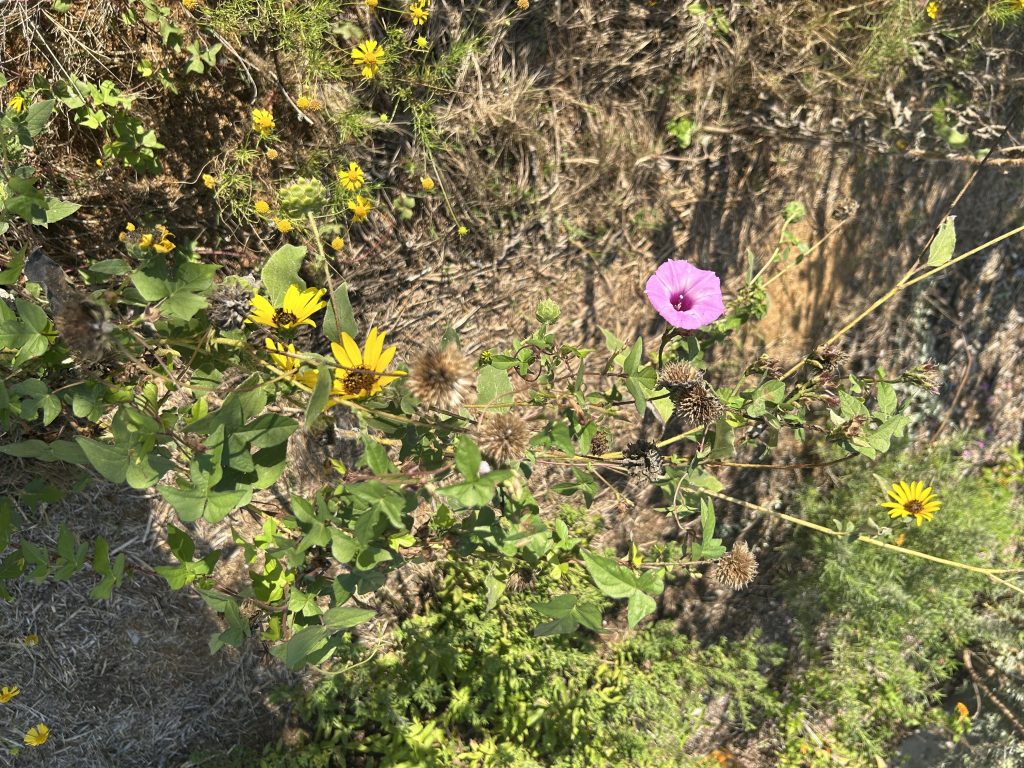
By this time of year, the spring annuals have long ago bloomed and seeded. Primarily what I am left with are mostly plants that came as volunteers such as Texas Goatweed, Yellow Sneezeweed, Beach and Common Sunflowers, Purple Bindweed, and Silverleaf Nightshade.
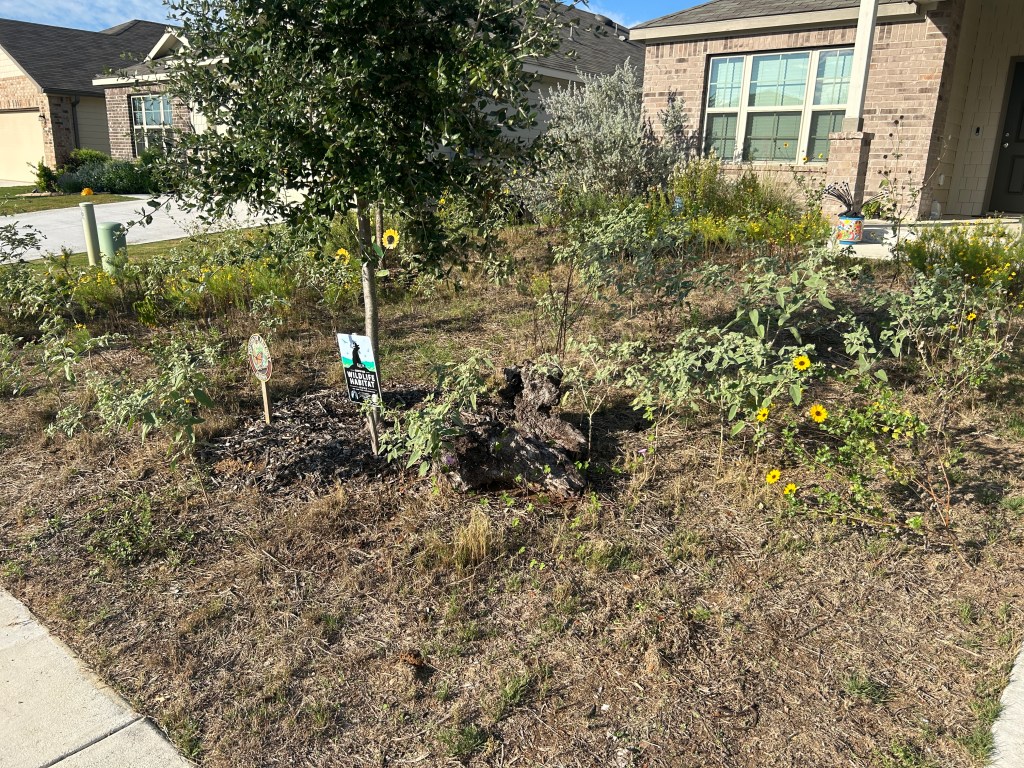
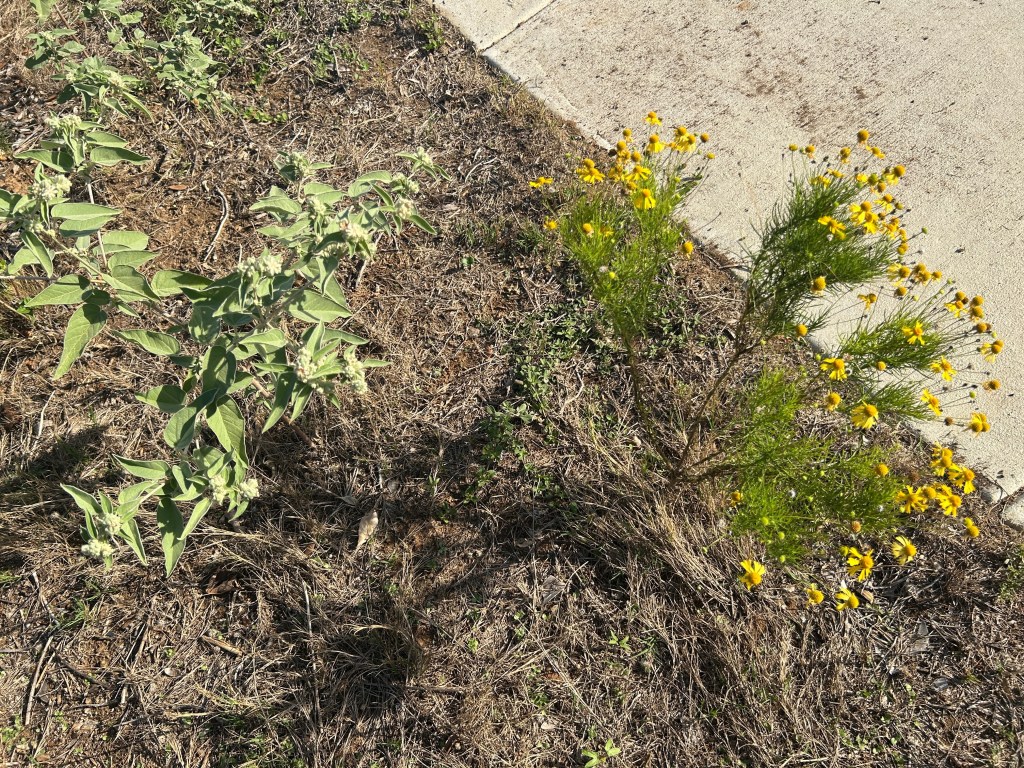
In the photo below, Texas Goatweed (Croton capitatus) is on the left and Yellow Sneezeweed (Helenium amarum) is on the right.
In the next photo, the largest yellow blooms are sunflowers, being used as a support by Purple Bindweed aka Wild Morning Glory aka Tievine (Ipomoea cordatotriloba).
In addition, there are some plants that I introduced, such as Mealy Blue Sage (Salvia farinacea), Spotted Beebalm aka Spotted Horsemint (Monarda punctata), and Standing Cypress (Ipomopsis rubra).
Still just a few inches tall, there is also a young Mexican Buckeye (Ungnadia speciosa) tree between the two larger oak trees. Eventually it will be more obvious, but for now it’s only visible when the rest of the meadow is cut short.
The first step was a crude cutting down of the remaining plants in the meadow that will be shredded to mulch, then either returned to the meadow or used elsewhere in the garden. I filled this green bucket about three times to add to the shredding pile.
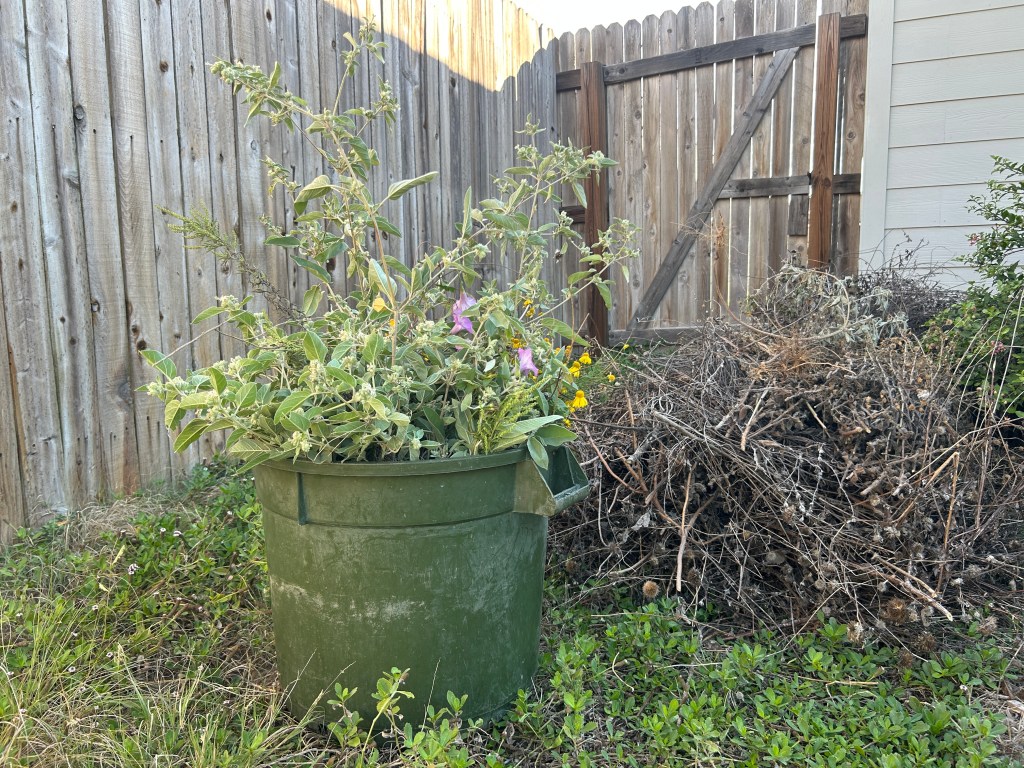
There are some plants that I particularly want to encourage again in the meadow, such as the sunflowers and beebalm, so those I chopped into smallish pieces and just laid them back down on the ground (mowing will chop them up further).
That was all I could manage on the first day. It might be mid-October, but we are still getting daytime temperatures up to 90 F.
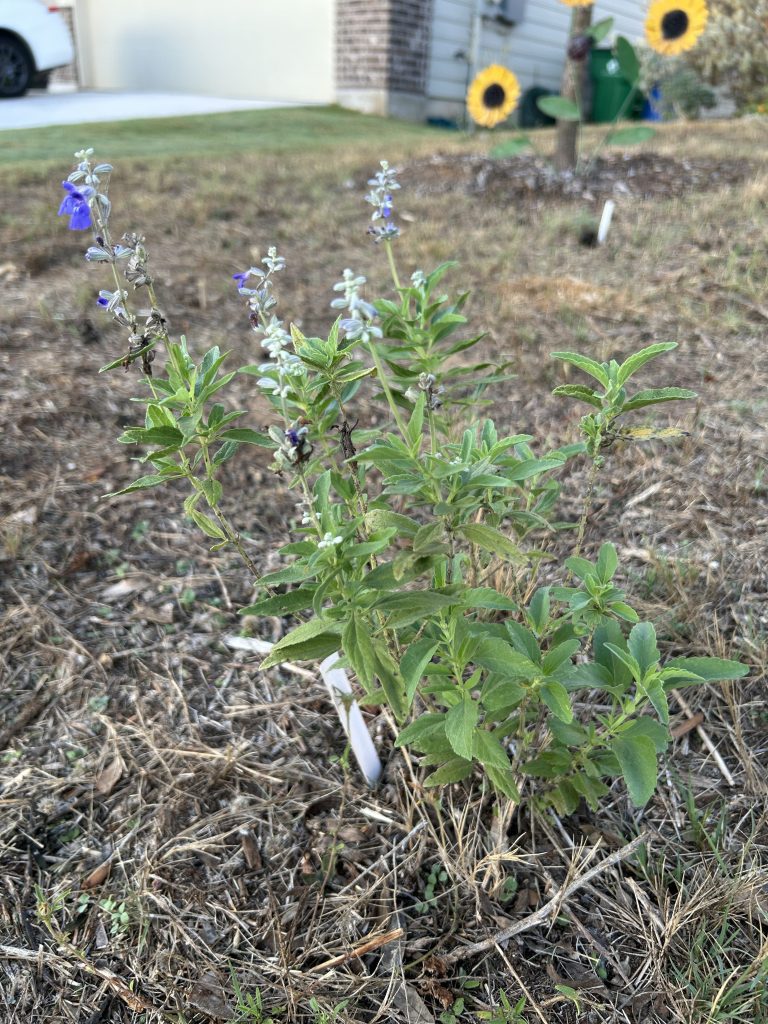
The next day I marked the plants that I want to protect from mowing for now. Mealy Blue Sage is still blooming and I’d like to keep it tall long enough to drop more seed. It’s a perennial, so each of these plants should still be here next year, but I’d like more.
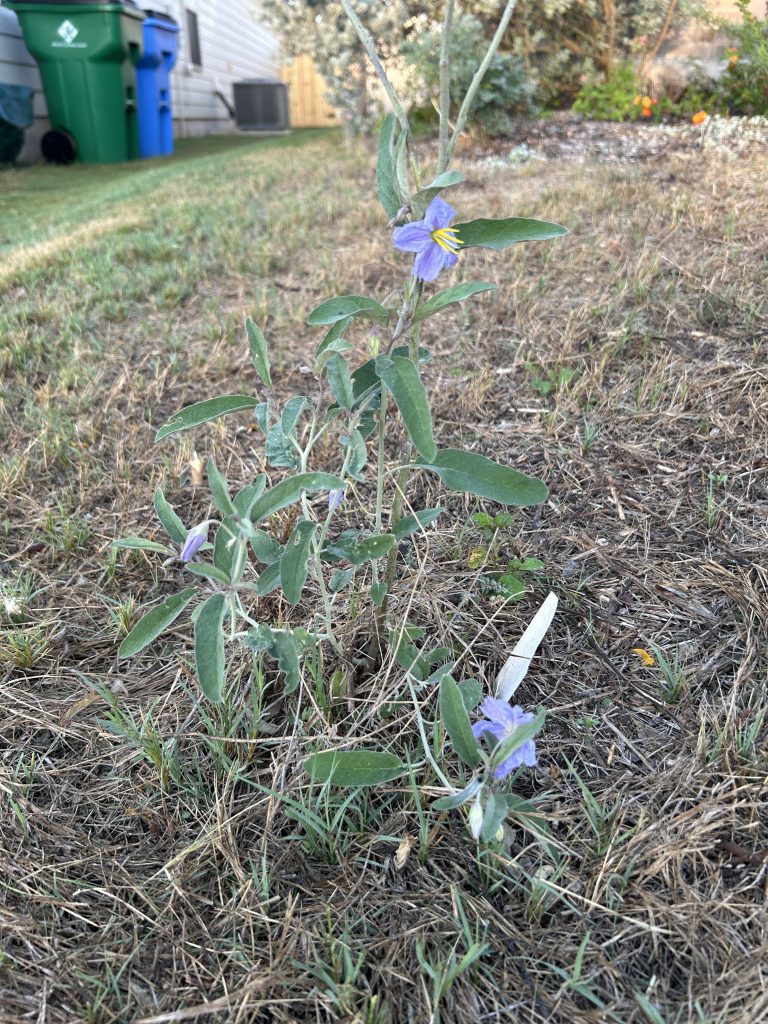
The same is true for the single Silverleaf Nightshade plant, which is currently still blooming.
Standing Cypress is a biennial plant and the small rosettes currently present should grow taller and bloom next year. They would probably survive mowing, but I’ve marked to avoid them just in case they don’t. I’d also like more of these.
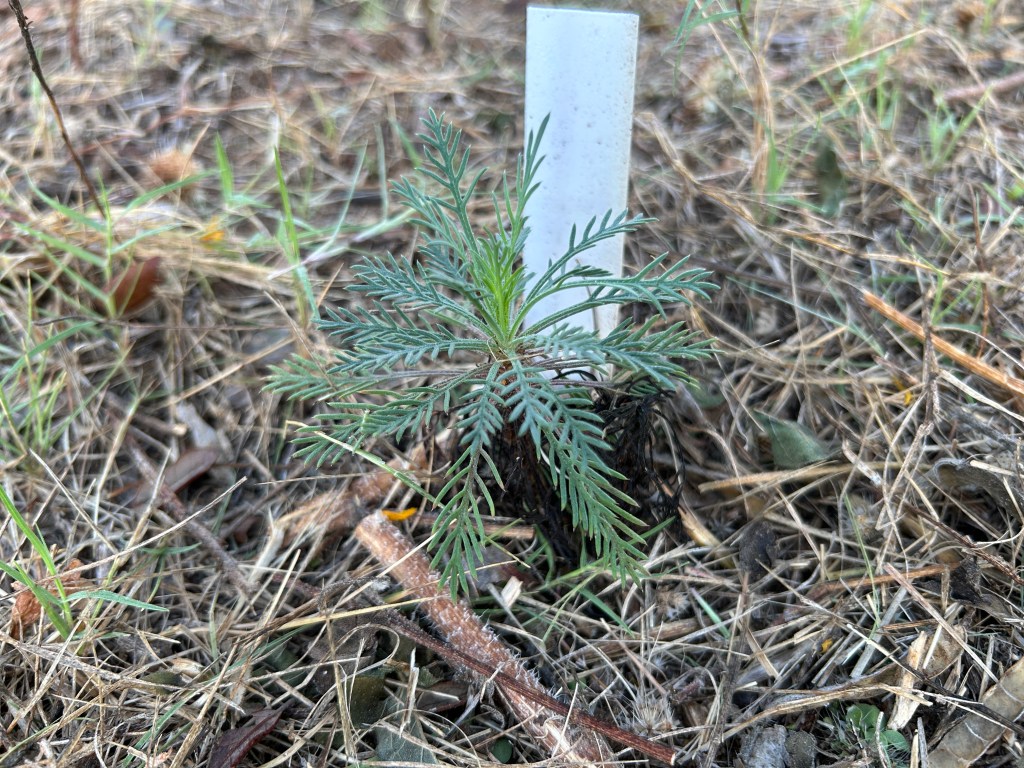
This is the Mexican Buckeye tree.
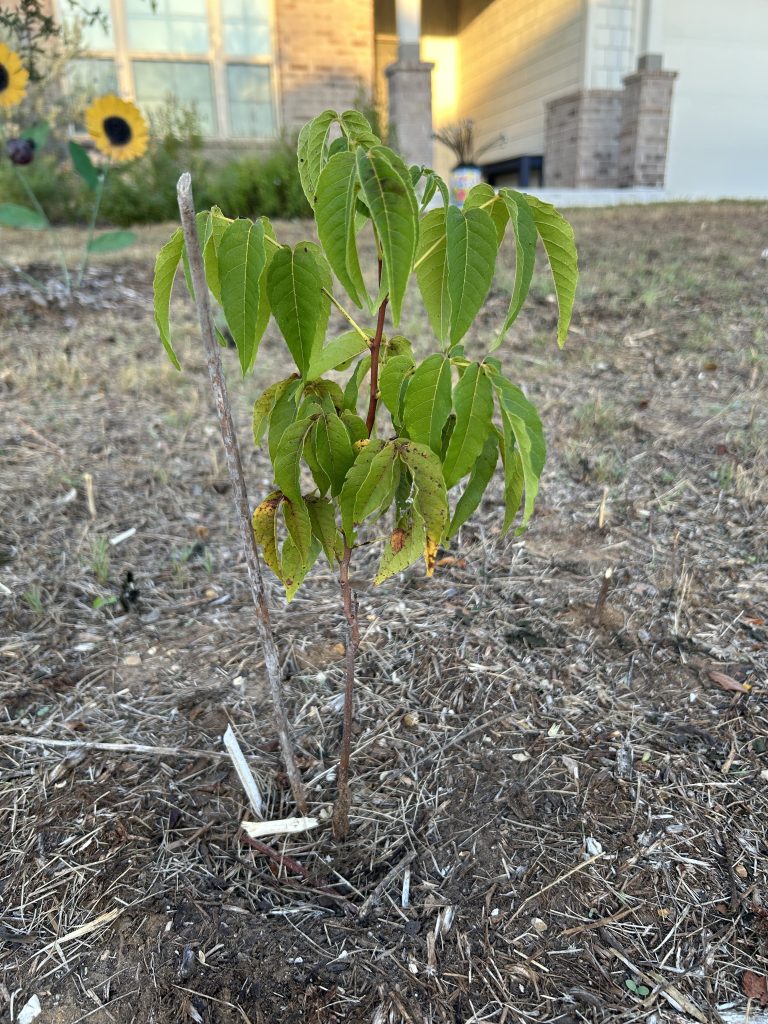
Once the marking was done, then I mowed the area.
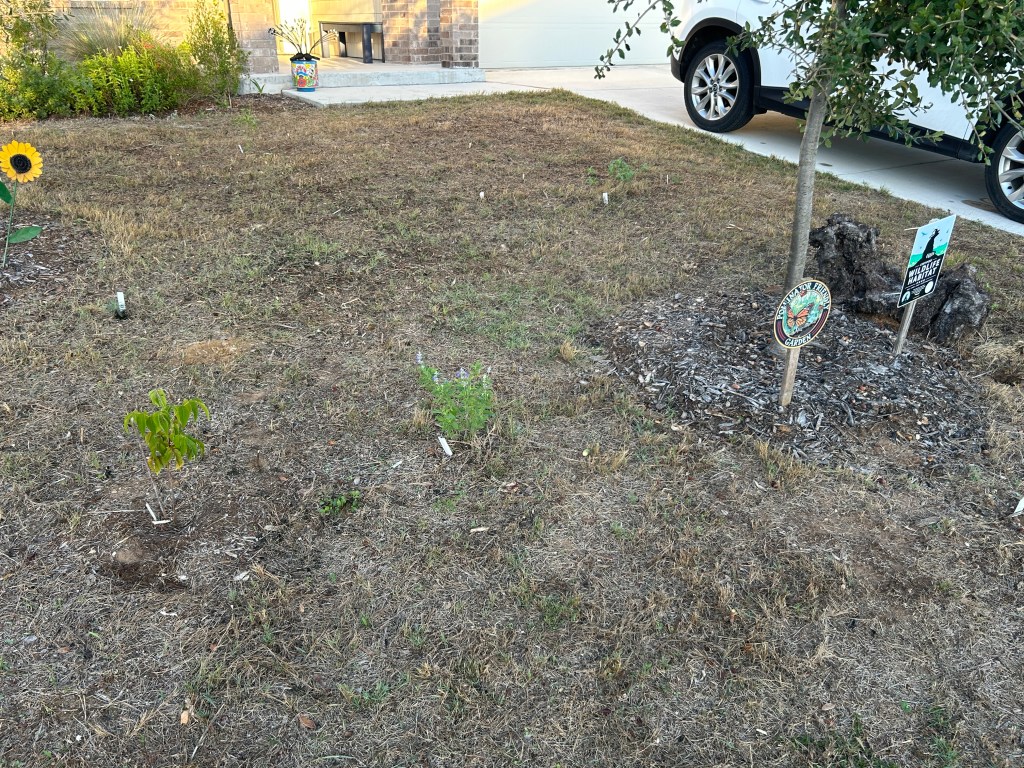
I never killed the original bermudagrass turf, so that is still present. It is somewhat subdued by the competition of the meadow plants, and by the fact that it doesn’t get watered, but it is alive and I expect to see it green up somewhat over the winter.
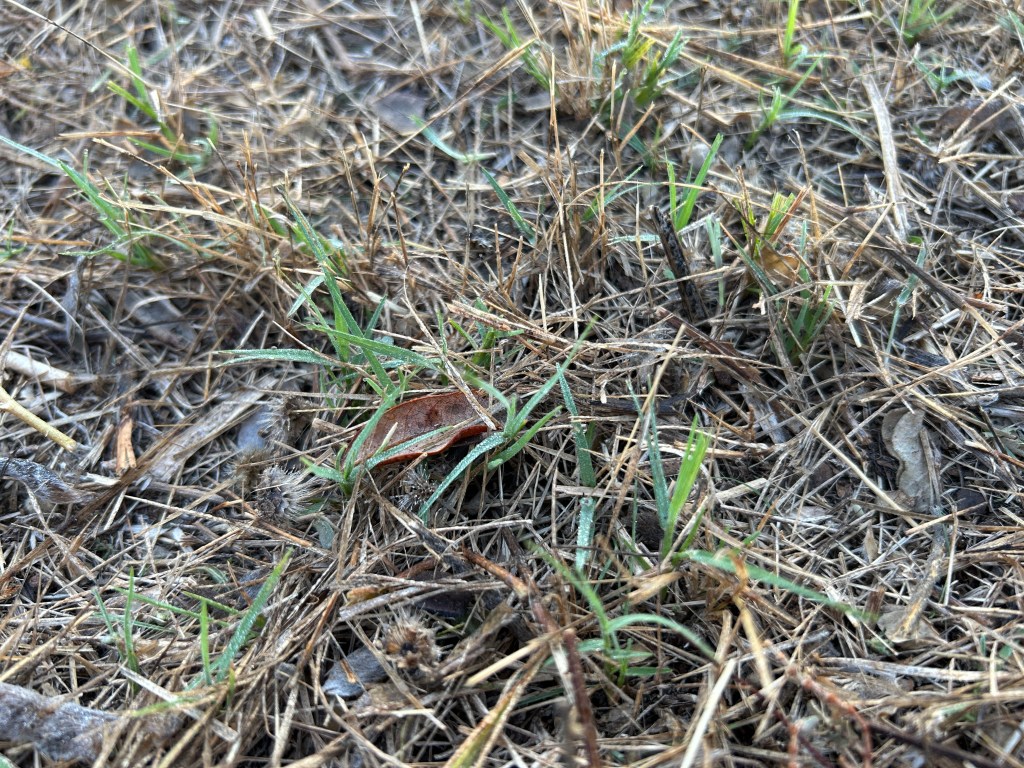
What is more pleasing is to see how many wildflower seeds are beginning to germinate.
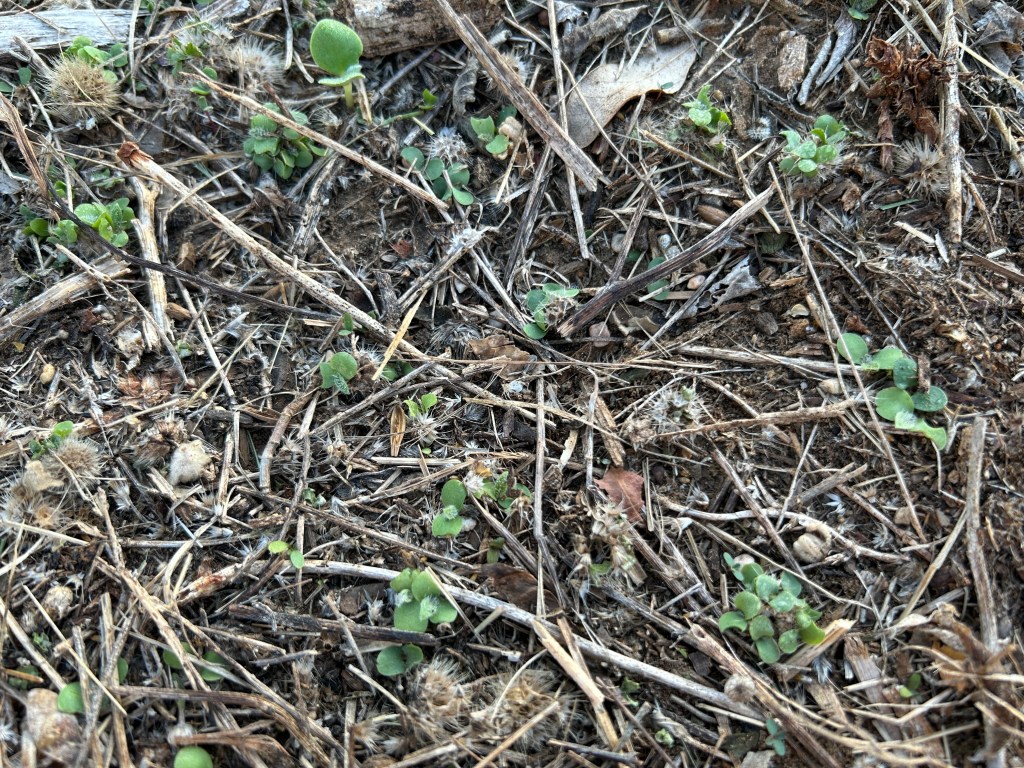
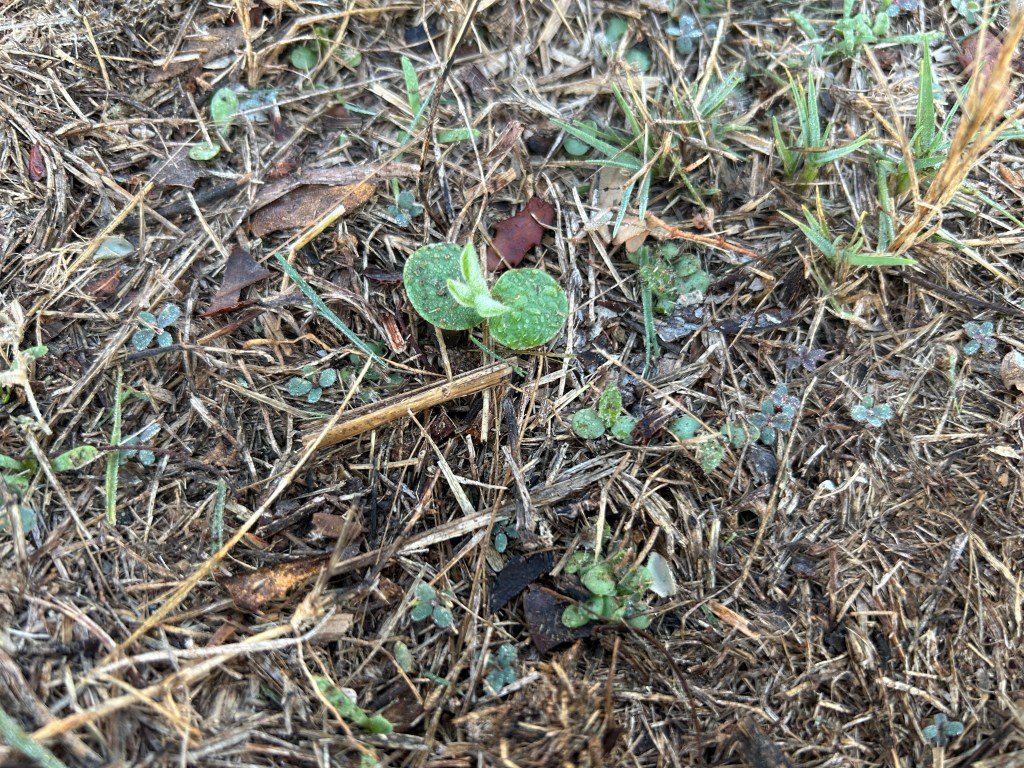
Next year’s bluebonnets are the easiest to spot. The first part to emerge is a single pair of round leaves, followed soon after by leaves of the regular bluebonnet shape.
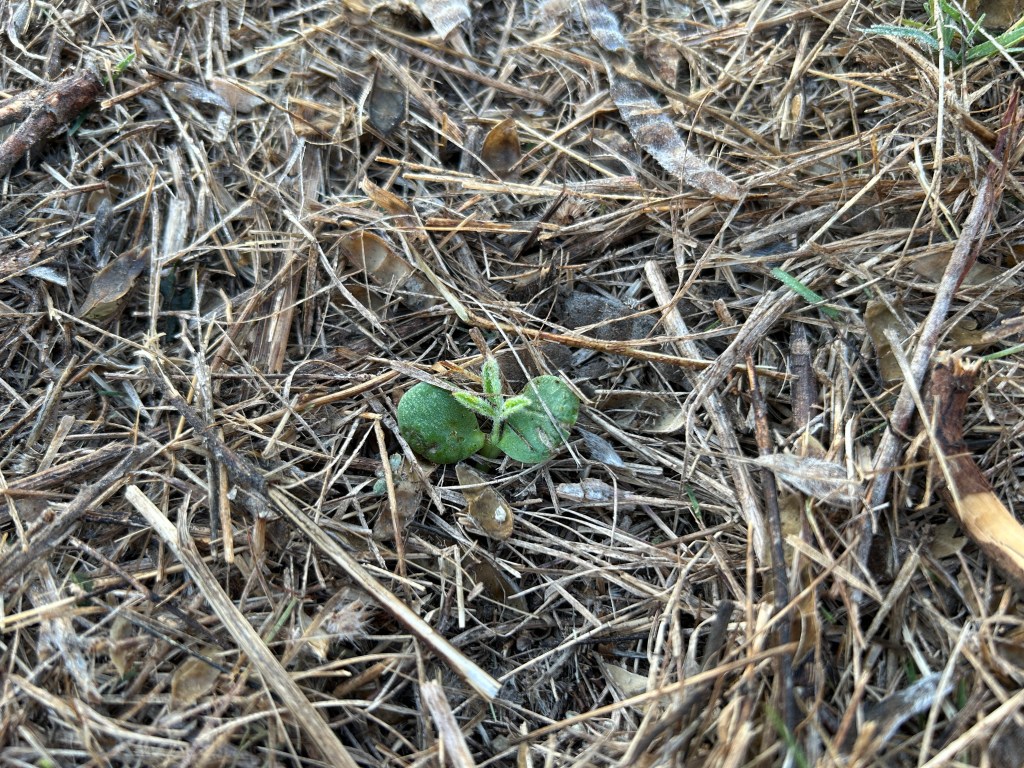
The spring wildflowers that are germinating now will stay small and close to the ground during the winter, spending their time growing stronger roots. They don’t mind being frozen, and then early next year they will begin to grow taller.
I’ll be doing more conditioning work in the meadow over the next few weeks, such as adding more wildflower seed that I’ve accumulated through the year, and adding more shredded plants as mulch. I will only mow as necessary, and I’ll stop that activity once the seedlings get to be more than about an inch tall.


Leave a Reply