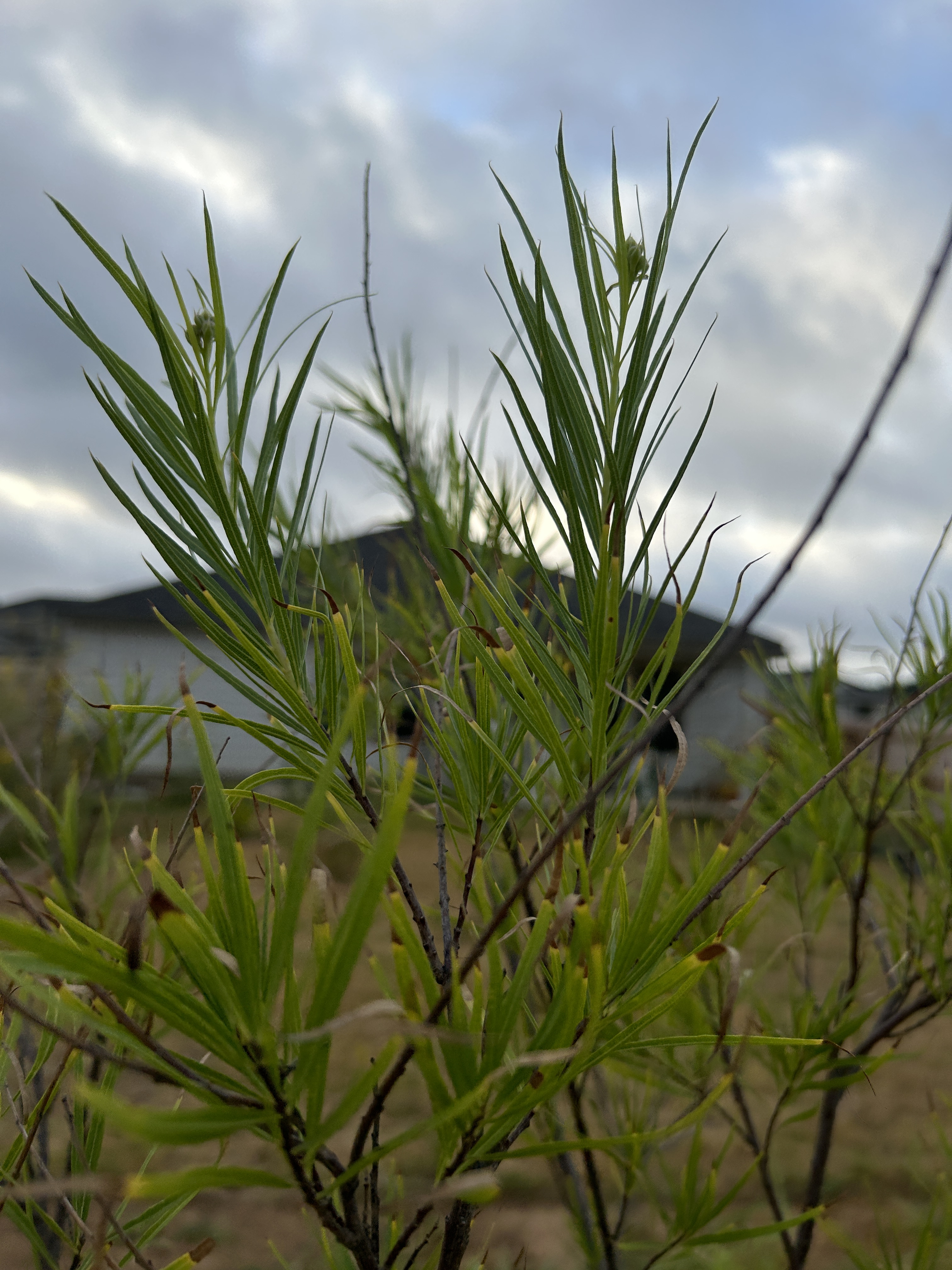
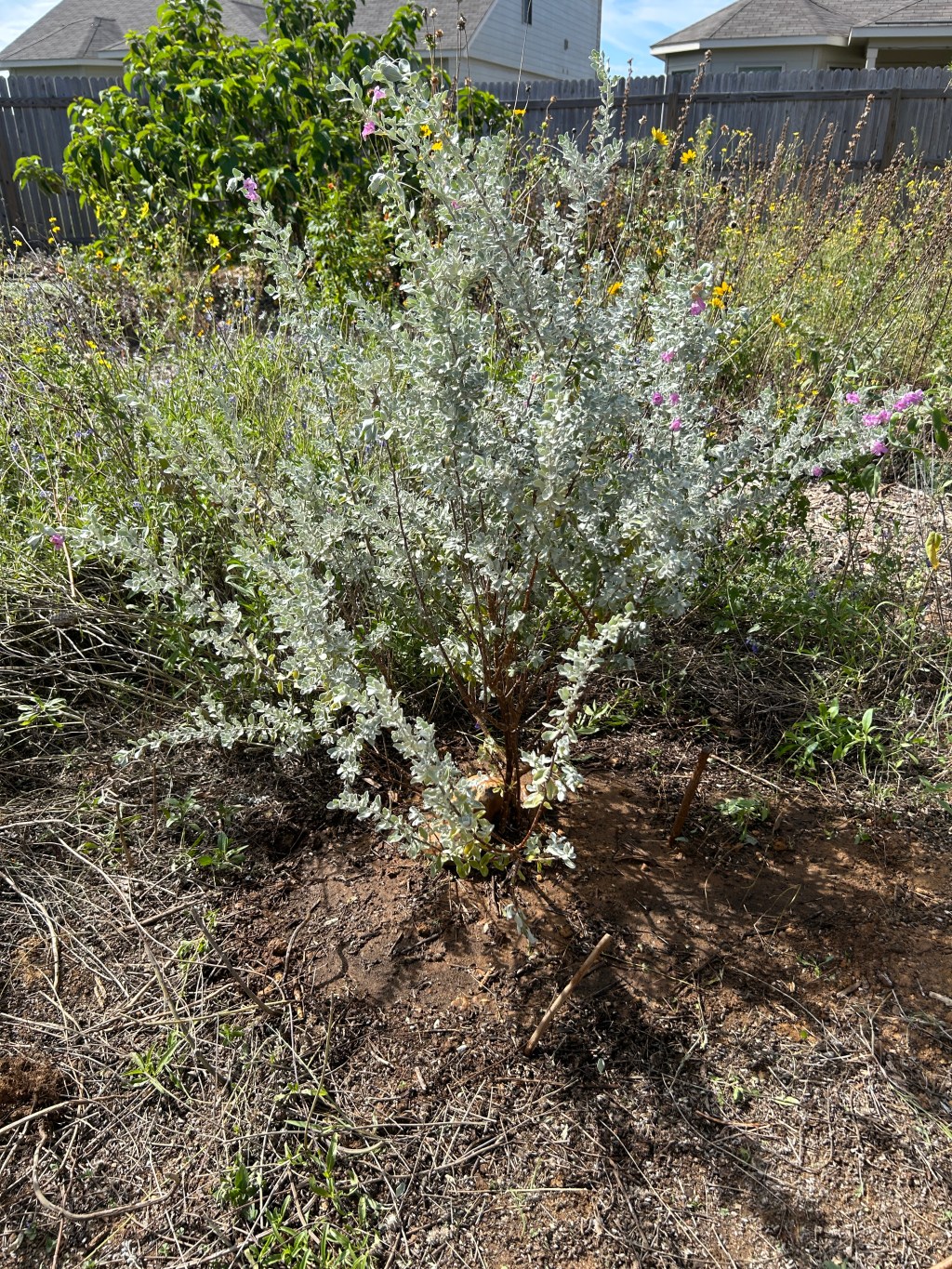
A couple of years ago I planted what was supposed to be a milkweed plant that actually turned out to be a Cenizo aka Texas Sage (Leucophyllum frutescens) shrub. It wasn’t particularly in the way of its milkweed neighbors, so I left it in place and now it’s about 3 ft tall.
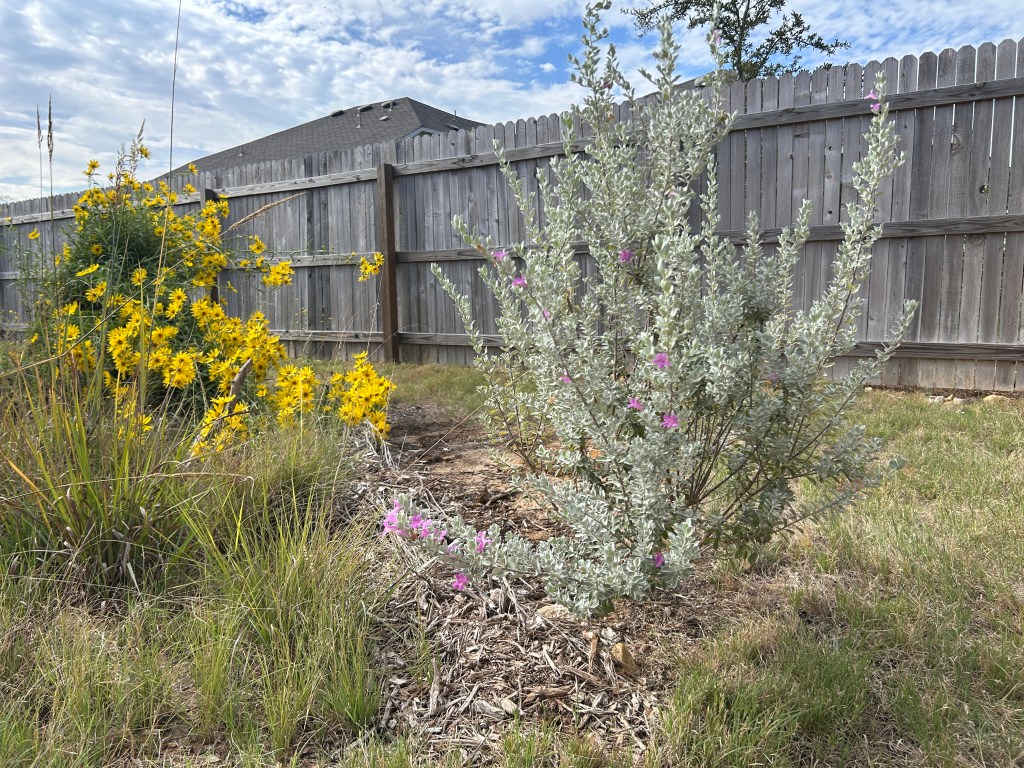
That particular area is going to be developed in another way and so I need to remove the Cenizo. The few milkweeds that were nearby have already been evacuated.
Transplanting a plant of this size is likely to be risky. It originally came in a 4″ pot so the roots must have grown significantly since then. However, the soil is stony so it won’t be easy to dig out without significant root damage. Nevertheless, I have nothing to lose in attempting the move, so I’m going to give it a go.
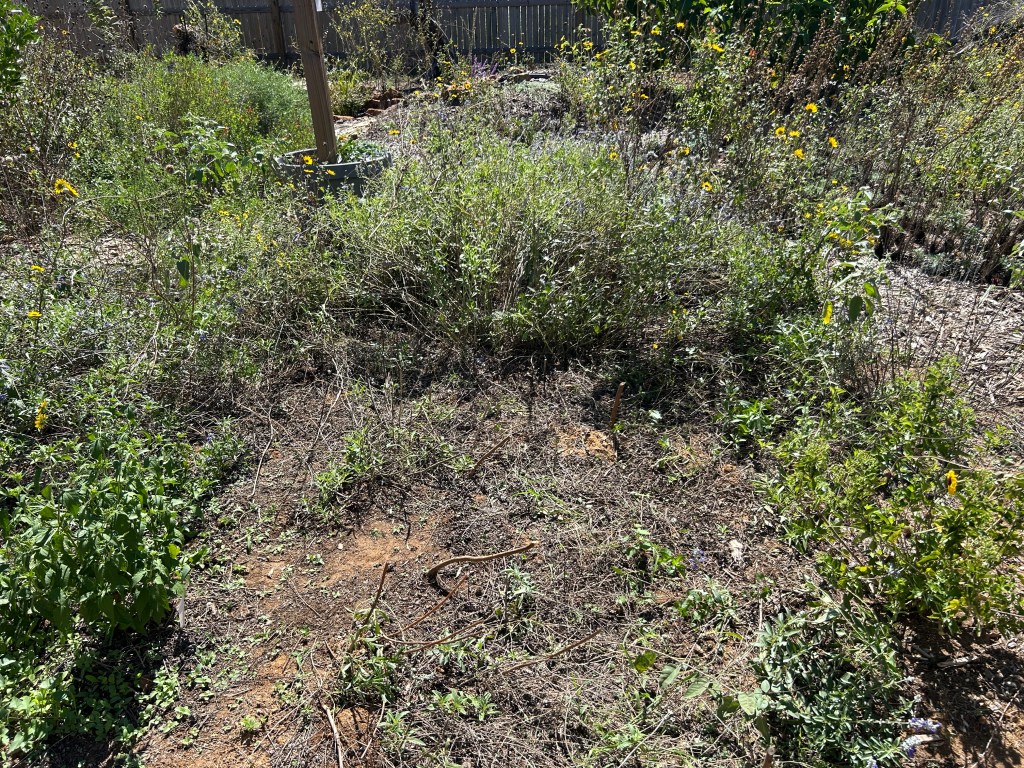
I identified a new location between a pair of shrubs (White Mistflower aka Shrubby Boneset and Fragrant Mistflower aka Crucita) and the large pot that holds my rain gauge. I cleared the area of the Mealy Blue Sage that was there (there is plenty of that plant elsewhere in the garden). Here’s a photo of the cleared ground.
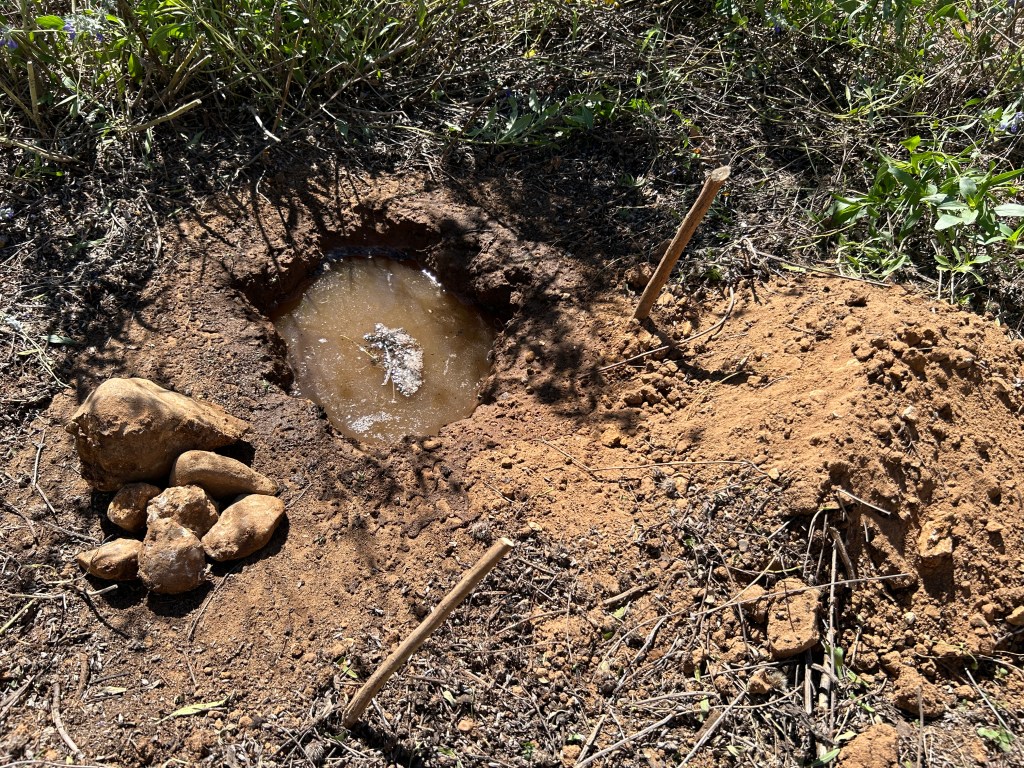
Then I dug a hole. At that time, I didn’t know what would be the size of the root system that I was going to dig up, but by pre-digging an approximately gallon-sized hole, that would minimize the time between digging up the Cenizo and getting it in the ground again. I filled the hole with water to presoak the surrounding soil. All of the stones to the left came out of that hole!
The next step (a couple of days later) was to wrangle the Cenizo out of the ground in its original location, adjust the new hole as needed, and replant it.
As I expected, there was no way to dig the shrub up easily. There were some roots that were wide and shallow, and some that went too deep for me to reach. Because of all the stones, the “digging” was a combination of chiseling with a pickax and scooping out earth by hand. Many roots were cut or torn in the process. Once I got to the point where the plant was pivoting around a single vertical root, I just yanked it out.
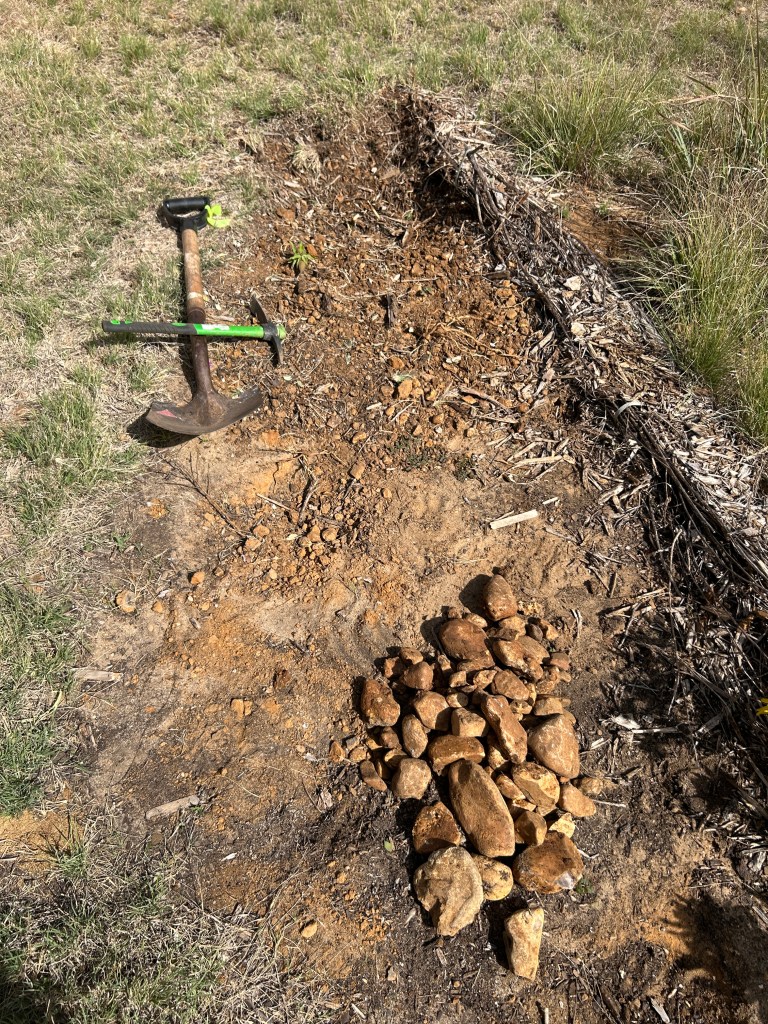
Here are the stones yielded from that process!
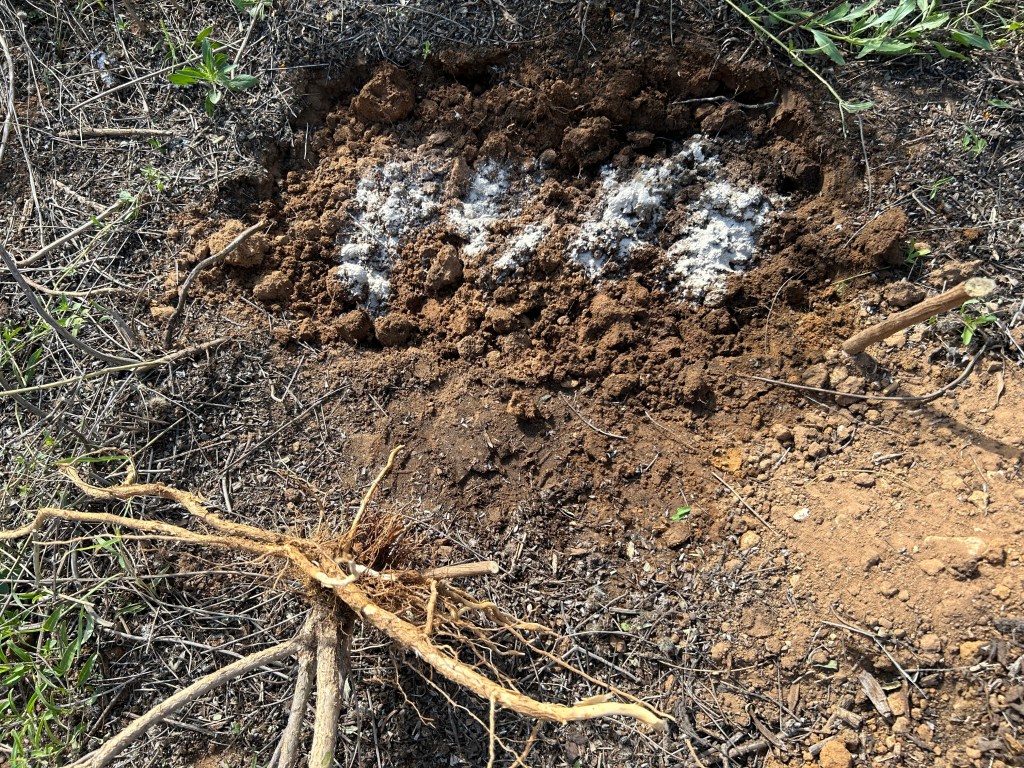
Once I got the Cenizo out of the ground, I saw that my original hole was too deep and not wide enough. So I adjusted that, added a good portion of mycorrhizae (a fungal root stimulant), and inserted the plant into its new home. The photo below shows the shape of the root system, so obviously it’s not a good starting point.
The transplant was a pretty brutal process, and I fully expect there to be major trauma. I will keep it well watered through the fall and winter, but don’t plan to do any pruning until next spring, when I can assess how much of the plant is viable. It might die completely, it might die above ground but grow back from the roots, or it might fare better than I expect.
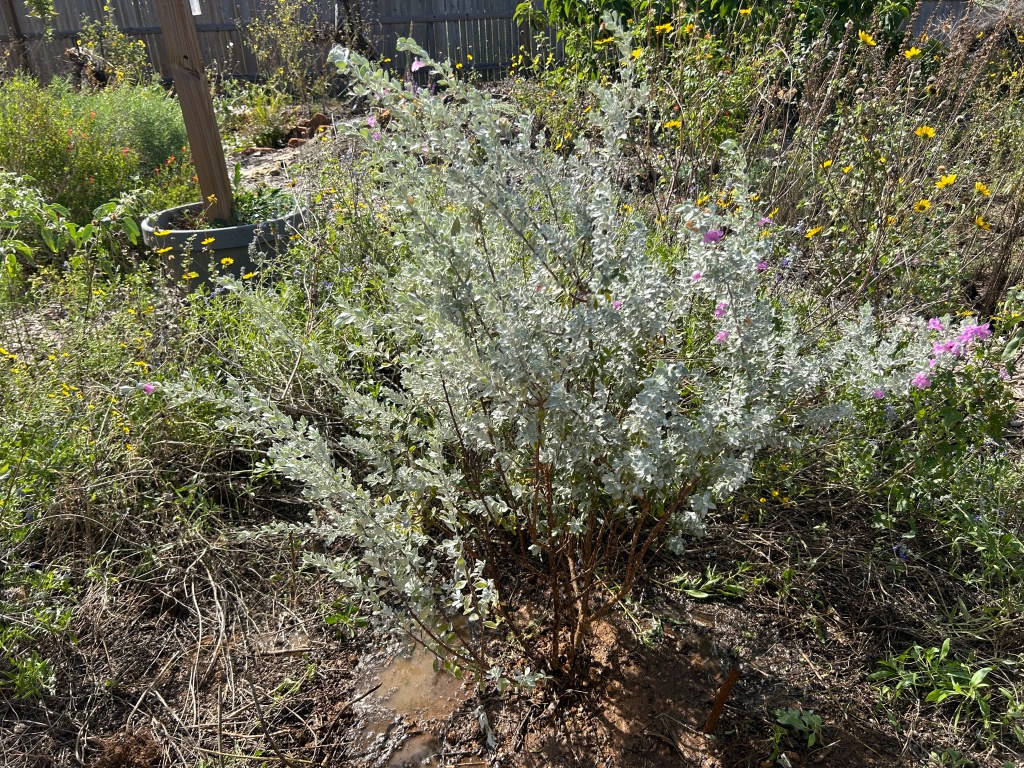
Because the transplanted roots are so shallow, I don’t know if this plant will be at risk of toppling over. At the moment, I have placed a few stones at the base. If it doesn’t seem stable, I could stake it or reduce its size by pruning.


Leave a Reply